Thursday, 16 December 2021

Book Review: The Stoic Challenge

Book Review: The Stoic Challenge


Review By Casey Douglass


The Stoic Challenge


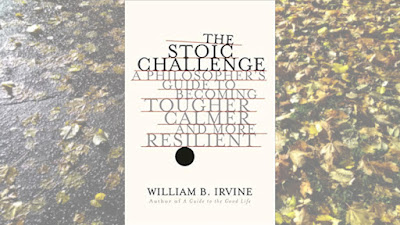
Sometimes, it can feel like life is full of setbacks. Whatever you try to do, things just seem stacked against you. It’s overwhelming. If like me, you have Obsessive Compulsive Disorder (OCD), you can probably multiply that feeling by a thousand or so. Then add one to the result for good measure. One of the elements of Stoic philosophy that most appeals to me is the notion of the Stoic Test, and William B. Irvine’s book The Stoic Challenge: A Philosopher's Guide to Becoming Tougher, Calmer, and More Resilient is firmly focussed on that particular approach.

Stoicism, as a philosophy, doesn’t entail suppressing emotions and keeping a stiff upper lip. That’s small “s” stoicism. Stoicism, the philosophy, takes a number of approaches in helping the practiser enjoy life just as it is. It does this by encouraging us to reflect on the things that are in, and beyond, our control, and living a life driven by values that aid us rather than harm us. Stoics still feel emotion, but they don’t needlessly fuel it by rumination. The practices they engage in also reduce the chance of negative emotion occurring.

William illustrates this nicely in the book with a burst water pipe analogy. The burst pipe, the setback, needs to be solved. The water that floods your house is your emotional reaction. Some water will leak, even if you are a super plumber who always has your tools at hand. Regardless, the sooner you can fix the pipe or stop the flow, the less damage the water will do to your home. If someone triggers anger in you (the burst pipe), you can either notice it and rise to the challenge, or you can lose your temper with them, stew all day, and flood your emotional basement. Using the Stoic Test approach is one way of dealing with this.

William explains that the Stoics purposefully adjusted how they framed events, to help bring their actions more into alignment with the virtues that they wanted to live by. An example of a re-framing that I always think of is that the sensations of anxiety and excitement are very similar, and how we view a particular arising depends on which frame we view said sensations through. That doesn’t mean in the midst of an OCD spiral, that I can suddenly decide to view it as exciting, but I get the concept if nothing else. Making use of the Stoic Test approach, for me, is more a reminder to at least recognise that things can be viewed differently.

To practise the Stoic Test frame, when you are confronted by a setback, you decide to frame it by saying that the Stoic Gods are sending you this challenge, for your own good, as a way to develop and grow. Now, you don’t need to believe that these Gods exist. You can even just imagine a sage-like elder standing nearby and prodding you towards the challenge. William emphasises that you need to bring this to mind as quickly as possible, preferably within five seconds of the first flush of frustration, anger or whatever is occurring, as it can stop the emotions running away with you. That’s about it. There are nuances and other helpful elements that William covers in the book, but that's the broad gist of things.

When I first started applying the Stoic Test frame to the setbacks I experienced, I was often slow in remembering to do so. I’d get a minute or two into some response and then remember it. Over time though, the notion came to mind more quickly. When it did, it genuinely seemed to help with how I viewed things. When I was able to apply it, it made setbacks seem almost amusing, or at the least, it felt fun to approach them as a challenge. I couldn’t do this all of the time, but it is slowly creeping into my world view the more that I do it. Things that trigger strong emotions are harder for me than more trifling setbacks, but as with anything, as the test frame becomes habitual, I don’t see why I couldn’t make headway with those too.

I had a nice example of a minor setback just before I started to redraft this review. I received an email coupon from a gaming website offering a discount. Often the coupons can’t be used if you’ve been a member before, but this one was titled in such a way that it suggested I could use it. What’s more, a game I have been interested in for awhile is included, so I was pleased at the idea of treating myself to a very cheap game. Well, the coupon couldn’t be used. It was the same as similar ones I’d been sent before after all, just titled in a misleading way. Within a few moments I reframed it as a Stoic Test and smiled. I did have a brief moment of wanting to tweet at the company to let them know that their coupon was misleading, but that urge soon fell away. Who cares. What’s more, the next day the company emailed and said that things didn’t quite go to plan, but now the coupon works as it should. It’s a low grade, low stakes example of how framing something differently takes some of the sting out of things. I wasn’t super upset, just mildly irked and disappointed. The fact that things resolved the next day in a favourable way was a pleasant surprise too, but if that hadn’t happened, I wouldn’t have minded.

With my OCD, I’m always careful not to buy into approaches that entail trying to control my emotions. This is counterproductive and just makes things worse. I like the Stoic Test frame approach as changing the frame just seems to encourage a softer, more accepting approach to things, without the emotional escalation that we often add to events ourselves. As the fear of setbacks in life, both large and small, is a major element of OCD, anything that can help me to view the world in a more tranquil and accepting way is just fine by me. If you have OCD, you might find the concept helpful to look into, but here, I can only speak as to how it has affected me.

The Stoic Challenge is a fine book that teaches the reader in a warm, friendly way. William illustrates his teachings with a variety of personal examples, and his easy going manner and acknowledgement that he still slips up, all make it a fantastic book. If you have any interest in Stoicism, or in how the way we view life can affect our mental health, I recommend this book. Also, if you have OCD and have yet to get any formal treatment, I’d do that first. I came to Stoicism after having CBT and other therapy, and I wouldn’t change that sequence of events for anything.


Book Title: The Stoic Challenge: A Philosopher's Guide to Becoming Tougher, Calmer, and More Resilient

Book Author: William B. Irvine

Publisher: W. W. Norton & Company

Current Price: £15.68 Hardback / £10.75 Paperback / £8.96 Kindle

ISBN: 978-0393652499

Published: 1 Oct 2019

Thursday, 9 December 2021

Dark Horror Short Review: Last Orders

Dark Horror Short Review: Last Orders


Review by Casey Douglass


Last Orders

I’ve never been in a pub or a bar when last orders have been called. It’s funny to me that I only realise this as I am drafting this review of a horror short called Last Orders. It’s barely seven in the morning and I already know myself a tiny bit better! Last Orders is set in a pub, and, well, I’m sure you can guess the timing of events too.

Chapter One: “The End” appears on screen. The camera lurks at an empty doorway. There is the flash and the bang of a gun going off. We don’t get to see what happened, just an empty kitchen. In the next chapter, a pub landlord is stacking upended chairs onto tables, eyeing the darkly-dressed stranger who is sitting quietly at the bar. We see a figure sitting outside in a car. The figure pulls out a gun. The landlord tells the man at the bar that it’s time to call it a night, and is then surprised when the stranger informs him that they’ve met before. As he does so, the music playing in the background scratches to a halt, and the landlord looks suddenly chilled to the bone. It turns out that he has a dark past, one that just might be catching up with him. At this point, the viewer has some information to begin their speculations about who is going to be shot, and who is going to do the shooting.


Last Orders

Last Orders reveals what actually happened by way of six chapters, each filling in a little more of the detail as to what is going on and who might be involved. It’s a fun way for the story to unfold, and it makes use of dream-like images and other flashbacks to fill in the more historical doings. For the most part though, it features some lovely prolonged and creepy scenes, where strange noises see the landlord wandering through the darkened pub, flash-light in hand, trying to find out if he is actually alone.

What the film does so well is to make great use of the location. Director Jon James Smith says that Last Orders was made during UK Covid lockdown, with hardly any money, but access to an old pub that couldn’t open due to the lockdown. Even though we only see it lit for a short time, while the two men chat at closing time, the bowels of the pub stand in stark contrast to the cosier upper floor. Downstairs is all bare walls, circuit boxes, pipes, beer kegs and harsh echoes. Then, when the landlord returns to the bar area once the lights are out, upstairs seems to have caught some of the menace of what lies below.


Last Orders

Of course, a stage is nothing without the actors who portray the story, and in this regard, Last Orders also delivers. The conversation between the landlord and the strange man at the bar felt like a meeting between two darknesses. One seems brawny and capable of violence, the other quiet and equally menacing. It felt like an important scene to get right, as so much of the short is set up by the questions it raises and the truths it hints at. The inflections in the quiet stranger’s voice as he says “But actually, we have met... Daniel,” followed by the look on Daniel’s face are probably my favourite moments in the film.

Another thing that stood out for me was the camera work. I enjoyed how it teased and toyed, and didn’t show all. There is one particular moment where it pulls away to one side and I was waiting to hear what happened. The silence stretches, and I realised that I had been tricked into predicting something that wasn’t actually going to happen. Last Orders is comfortable with silence and tension, two things it builds so adeptly. When there are sounds, they are suitably creepy: ominous drones, chants, squeaking floorboards and scraping metal. The sinister voice-over that narrates at certain moments is also well executed, as it not only sounds suitably threatening, but also provides hints as to the identity of the speaker over time.


Last Orders

Last Orders is 21 minutes of quiet, ominous British horror. It’s the sort of thing that seems to nestle lovingly into the darkest hours of the evening, when the mundane world is blanketed by night and the people that are still awake are left alone with their thoughts and fears. Last Orders is currently touring the film festivals so isn’t released as of yet. It picked up an Official Selection at the London Lift-Off Film Festival 2021 and I’d be surprised if that’s the last nod it gets. If you get the chance to watch it at a festival, or later when it is released, I’d say it’s well worth checking out.


I was given review access to the film.


Film Title: Last Orders

Starring: Alastair Parker (The Witcher 3, Mass Effect 3), Steven Elder (The King, Rillington Place), with Charles Edmond.

Written & Directed By: Jon James Smith

Score: Stewart Dugdale

Producer, DoP, Editor & VFX: Jon James Smith

Sound Design: Stewart Dugdale & Jon James Smith

Associate Producer: S. K. Bishop

SFX Supervisor: Eddy Popplewell

SFX Crew: Sophie Bramley

Sound Recordist: Matt Wilkinson

Friday, 3 December 2021

My Dark Ambient 2021

My Dark Ambient 2021


By Casey Douglass


My Dark Ambient 2021

It’s almost the end of another year, so here is a post in which I look back at some of the dark ambient music that has caressed my lugholes over the last twelve months. The vast majority of albums mentioned actually released during 2021, but I included some older releases that were none the less, new to me in 2021.

When it comes to what I decided to include, I chose the albums that I kept drifting back to long after I had finished the review. Or, maybe I remember listening to them tens of times during a certain period during the last year. As I only tend to review releases that I feel reasonably confident that I will enjoy, even the ones that I don’t mention here but are sitting on this website, are still well worth checking out.

Before I get to the list, I just wanted to pay my respects to Mount Shrine once more. Cesar created some of the most dreamy and relaxing music, and I’m still so sad that Covid took him in April. His albums have been in my permanent rotation ever since I first listened to Ghosts On Broken Pavement. Shortwave Ruins is also an excellent album for winter-based relaxing, in my humble opinion. Rest in Peace Cesar.


Ghosts On Broken Pavement. Shortwave Ruins

On to the list.


Dark Litanies of Terra
Xmas is often a time when certain people listen to Gregorian-styled chants. This year, I intend to make full use of Monasterium Imperi’s Warhammer 40K inspired, chant-laced Dark Litanies of Terra (2020) and Mundus Sanctorium (2021). While everyone else can fill their minds with notions of beards in the sky, I’ll happily be absorbed into a bleak mental world in which humanity plunges into the depths of space, with a might and a zealousness that surpasses anything we’ve seen in real life.


Nostromo
A similarly space-based album is Sleep Research Facility’s dark ambient album Nostromo (2007). As I stated in my review, I have no idea why an Alien and a dark ambient fan such as myself, has taken so long to finally get around to checking out Nostromo. It’s like loving peanut butter and jelly and never thinking to try to put them both together. Unthinkable! Nostromo is a simmering, ominous journey through the decks of the titular spaceship, one that skilfully evokes the feelings of the film. I listen to it on an almost weekly basis.


Megafauna Rituals
After two sci-fi albums, next up is one that sends the listener back in time. Paleowolf’s Megafauna Rituals (2017) fills the ears with shuddering drumbeats and crumping footfalls as it conjures the spirit of the great mega beasts that roamed the planet during the last ice age. Shortly after I picked up this album, we had a few days of blizzard-like snow. As I walked across frozen farm-land, looking down as the snow whipped past my feet, I listened to Megafauna Rituals and it certainly added a wholly different feeling to the raw elements. If you buy this album and you are blessed with some harsh snowy weather, pop in your earphones and give it a listen as you stride out into it.


#44 - The Recluse
The Owl’s dark ambient album #44 - The Recluse (2021) is another that, at times, felt wintery, particularly the second track Glacial Beauty. #44 - The Recluse is an album that mixes warm smoothness with harsher noise, and was initially one that I wondered if I’d gel with. Well, I keep returning to it, and it’s still one of the best albums I’ve ever encountered for quieting my mental chattering and ruminations.


666 Minutes in Hell
I kind of want to move onto a heat-based album now, all of this talk of snow and glaciers is decidedly chilly. BlackWeald’s 666 Minutes in Hell (2021) is just the ticket, as it’s an eleven hour journey through the realms of Hell. Some of the tracks are as long as some entire dark ambient albums! The soundscapes give the listener a great variety of brimstone-laced vistas and sounds to enjoy, from the impression of being buried alive, to a giant infernal furnace and abyssal depths with distant cries and strange ululations. Who needs eggnog when you can mentally stroll along the edge of a lake of magma?


The Umbra Report
Finally, Cities Last Broadcast’s The Umbra Report (2021) is an album that really masters the “invisible threat in a quiet room” kind of vibe. This album drip-feeds an ominous feeling of unseen forces shifting and stirring in what could be an otherwise mundane vista. There are strange warbling voices and notes that seem to ping from vast distances, straining to reach your ear. A tense, very atmospheric album, and like the others mentioned above, one I listen to regularly.


***

That about does it for this year. Thank you for reading, and thank you if you are one of the regulars who often visits my website. I hope you have a good Xmas and New Year.

Saturday, 23 October 2021

Dark Ambient Review: Nostromo

Dark Ambient Review: Nostromo


Review By Casey Douglass


Nostromo Album Art


Two of my most common internet searches are “dark ambient” and “alien”. Sleep Research Facility’s dark ambient album Nostromo has blipped on my motion tracker any number of times, but it’s only recently that I actually got around to checking it out. If you asked me why it’s taken me so long, I honestly have no idea. The album initially released in 2001 and was later remastered in 2007, complete with an extra bonus track. It is the 2007 version that I am taking a look at here.

Nostromo is an album inspired by the first eight minutes of the film Alien, the description setting the various tracks up as a journey through the decks of the ill-fated vessel. One of the things that I really enjoy about the Alien series of films is the harsh bleakness of the universe, a feeling boosted by the unnerving score, the industrial visuals and of course the unbridled hostility of the Xenomorph. It feels sharpest in the original trilogy but I still think it’s there in the latest offerings, to some degree. What I hoped for from Nostromo, was a series of tracks that tapped into this “bleakness”, hopefully by way of evoking some of the sounds and moods of Alien. It didn’t disappoint.

The album opens with A-Deck, a track that is based around a pulsing rumbling throbbing bass sound that feels like it’s rolling along narrow metal corridors and poking its way through the darkness. A growing, rougher tone and an airy shushing shimmer meld with it soon after, distant muted impacts creating the impression of vast machinery working. It’s toward the end of A-Deck and into B-Deck that one of my favourite sounds appears however.

By the time B-Deck arrives, the listener is listening to tinny, twisting electronic echoes, crispy static, and my aforementioned favourite sound, an understated echoing clicking. This clicking puts me firmly in mind of the small clicks of a motion tracker when it isn’t detecting any movement, just the quiet tick-tick-tick to show that it’s actually working. Other sounds swirl around this, with pulsing bass flowing and ebbing at intervals too. Again, another track that had me feeling like I was roaming a space vessel that is in hibernation mode, the barest glimmer of status lights all that shines from any reflective surfaces nearby.

C-Deck is a static-filled, quietly beeping track, one that shimmers and feels a little lighter. Maybe this is the deck where the life-support lives. At the least, the tones at times seemed a little like a mellow “ahh” tone to me, lending this track a more peaceful, though still dark quality. D-Deck starts with fast pulsing bass that is soon joined by quiet static, vibrating deep tones and flurries of subtle beeps. This feels more “engine roomy” than anything, the rotating whirring that comes later maybe even hinting at ventilation fans. It’s a very lulling track.

E-Deck sees us back in the static again, static that is soon punctuated by somehow sonorous chiming bass tones. It feels meditative, but even the static starts to pulse and react to the bass reverberations. There is also a high whining tone sitting comfortably behind things, one that again, seems to take on the general pulsing quality of the track. Narcissus is a bonus track that didn’t appear on the original album released in 2001, and it’s a great one to finish the album with. It’s a higher pitched, buzzing track, with sounds that fizz and roam from ear to ear. There is a light resonance to it, and a growing pulsing building agitation to the roaming tones. It feels like sanctuary, stress and hope. It deepens as it passes the midpoint, and slowly simmers with slow, possibly cryo-sleep breathing-like sounds as it plays out.

Nostromo is a lovingly dark yet peaceful tour of one of sci-fi and horror’s most well-known spaceships. It’s an album that serves up two things, depending on the listener. If you have never watched Alien, it gives you a deep, rumbling slice of space ambient to chill out to. If, however, you have foreknowledge of what befalls the Nostromo, the whole thing seems to have a calm before the storm feeling, or maybe, the sensation of the future haunting the past. However it might be described, I’ve listened to it every day for a week and I intend to listen again today.


Visit the Nostromo page on Bandcamp for more information.


Album Title: Nostromo

Album Artist: Sleep Research Facility

Label: Cold Spring

Released: 5 December 2007

Tuesday, 19 October 2021

Dark Ambient Review: Dismal Dreams From The Witch House

Dark Ambient Review: Dismal Dreams From The Witch House


Review By Casey Douglass


Dismal Dreams From The Witch House Album Art


One of the things that I find most enrapturing about the dark gods and creatures of H.P Lovecraft, is the way that they still feel like nothing else out there, even when dragged into modern settings. Dismal Dreams From The Witch House is a dark ambient album from ElectronicDeathBlackDogs. It is an album that’s described as a modern take on Lovecraft’s tale The Dreams in the Witch House. What will the listener find in the album’s soundscapes? Read on to find out.

Wind. Not the “too much fibre in your diet” variety, but the kind that makes trees tremble and wooden eaves creak. Actually, there may be someone whose own “personal wind” does that, in which case, see a doctor maybe? Wind, whether rustling leaves or howling through jaggy openings, is a field-recording that sets the scene in almost every track on this album. I really like this. There is something ominous yet comforting about an audibly gusting wind, especially when you are indoors in the warm. The wind on Dismal Dreams From The Witch House’s tracks sets a barren, desolate scene. It’s further joined by other sounds that deepen this feeling of exposure to the elements.

There are other field-recorded sounds, such as creaking, rattling and the pattering of grit against window panes. There are also deep vibrating notes, warbling distorted tones, drones and abyssal rumblings. Each track feels like the listener is sat on the edge of a precipice, whether gazing through a window at a dark valley, or metaphysically rubbing up against forces that aren’t usually so close to our reality. Forces, I’m sure, that Lovecraft would insist that it would be better that they remained unaware of our existence.

Oppressive Nature is one of my favourite tracks. It opens with the sound of wind and a deep rumbling drone. There are small clicks or rustlings, and the simmering rattling of a cymbal. String notes grow and flow in a forlorn gyration, the rumbling stopping briefly to give way to a peaceful moment. The strings fade over time as the other sounds reappear and depart, doing their own thing. I must admit that the way that the strings seem to take an age to fade before they sing out again, only to fade slowly once more, is the element of the track that my attention always seemed to latch on to. It’s very pleasing. This track, for me, gave me the feeling of gazing at the Moon through skeletal, wind-swept tree branches.

Ominous Impacts is a track that gave me a wholly different environment to delve into, being a track that felt like it was unfolding underground, possibly in an old mine. It begins with a rumbling and a recurring distant impact. A low vibration rises in what feels like a claustrophobic soundscape. There is the metallic rattling of what could be vibrating mesh or metal sheeting, a staticy water-like sound, and after a short while, a heart-beat that echoes amongst the reverberations. This is a low track, oppressive. The relaxed beat of the heart though, suggests it’s not the heart of the listener, but the thing in the shadows that is watching.

Finally, The Cryptic Cross is a track that I wanted to touch on. It starts with a buzzing radio voice and a pulsing juddering that swells against a backdrop of hammers hitting something. What came to mind was a rundown apartment block, one that is backed by a communal green or park area. Someone is sitting, watching a crackling TV, every now and then looking out through their window, down at the construction being completed on the green. The cross of the title maybe. Later comes a guttural voice, along with a kind of barking vocal, something that put me in mind of the fishy residents of Innsmouth. Smoothly piped tones seem to round out this impression, bringing to mind a conch-blown summons and a call to the deeps. This felt the most modern soundscape to me, the images it brought to my mind at least.

Dismal Dreams From The Witch House is a dark ambient album that provides the listener with a fine dose of the trembly, insidious apprehension that Lovecraft’s tales seem to nurture. The swaying string-notes, wind and strange voices sit pleasingly uneasily in ominous rumbling soundscapes, soundscapes that seem on the verge of tipping over into rotting, corrupted deeds and events. If you like your dark ambient Lovecraftian, check out the link below to find out more about the album.

Visit the Dismal Dreams From The Witch House page on Bandcamp for more information. You can also check out the track Ominous Impacts below: 


I was given a review copy of this album.


Album Title: Dismal Dreams From The Witch House

Album Artist: ElectronicDeathBlackDogs

Label: Noctivagant

Released: 21 August 2021

Tuesday, 12 October 2021

Dark Ambient Review: Abductee

Dark Ambient Review: Abductee


Review By Casey Douglass


Abductee Album Art


When I briefly flirted with New Age instrumental music, before I discovered dark ambient, one of my favourite CDs was about UFOs and aliens. It even had a shiny-eyed grey alien on the cover. Looking back, it was quite a dark album, but if you compared it to Mombi Yuleman’s dark ambient Abductee... well, its a little like comparing a pink unicorn to a denizen from one of the levels of Hell. That’s a good thing, in Mombi’s favour, just to be clear. Unless you have a thing for pink unicorns of course.

Abductee takes its inspiration from the many stories of human and alien interaction that can be found in the Fortean media, and sometimes, in the mainstream. I dare say that there are some notions from horror and sci-fi films and novels in there too, as the subject often provides fertile ground for creepy tales to be told. Abductee contains ten tracks that seem to take the listener on a journey with a hapless abductee, beginning in a forest and taking in hurried chases, furtive exploration, and being returned home at the end of things.

Mombi does a great job of weaving in sounds that seem to embody the subject matter wonderfully. The foremost comes from a number of tracks that feature a kind of ‘rustling plastic’ aesthetic. I don’t know about you, but for me, with the theme of the album in mind, this has the feeling of something medical, something experimental going on. Another prominent stable of sounds are the hissing, beeping radio-like swirls of static and electronic tones. Technology certainly plays its role. And of course, there are those fleshy, screeching, biological sounds that hint at strange creatures and other humans nearby. These three elements meld together so well to create a feeling of being onboard a dank alien craft, a new horror lurking around almost every corner.

Cocoons is a track that depicts the creepy exploration aspect mentioned above. It begins with a swirling, pulsing sci-fi tone and a hint of trickling water. There is a faint, distant high tone and a drone that begins with a sparkle for accompaniment. String-like notes sway and flow, a light melody begins, and a sense of chittering things flying around came through to me. Towards the end of the track, groans can be heard as the atmosphere begins to judder. It probably comes as no surprise that this track conjured visions of rooms full of strange cocoons to my mind, rooms complete with victims begin absorbed into their fleshy walls.

Medical Examination (feat. Noctilucant) is another fine track, one that, for obvious reasons, felt the most medical of them all. The opening sound is the thump of a beating heart. There are bubbling sounds, mechanical equipment whooshing, and an echoing beat that seems to take on the mantle of a clock ticking. There are swells of tone and hiss. There is an impression of juddering, and around the midpoint, a hollowness. Certain of the tones seem to embody a kind of sharpness, their clipped, metallic nature sitting nicely in a soundscape of whirring, pulsing, chiming activity. Flowing beneath all of this are the deep roaming droning tones that bathe everything in an atmosphere of darkness. I really enjoyed this track.

Finally, Grays is another track that I wanted to single out, as it has a majesty all of its own. It opens with a deep drone and a sparkling chime. There are plopping sounds, strange cries and an airy, sinister feeling. A chant-like droning begins, a whistling quality at its edges. It feels very meditative, but also otherworldly, as someone might feel when witnessing something never before seen. Bass impacts reverberate and agitate the soundscape into more strange cries. A rattle-snake hissing and echoing knockings emerge, with radio swirls and a low gritty clicking. As the track reaches its last third, a kinetic, pulsing rhythm begins, tinny squeaks nestling into the wall of drone. For me, this track was about someone finally seeing the answer to a question that they had half feared to know.

Abductee is a dark ambient album that simmers with interplanetary threat, but rather than the “space will crush you” variety, seeds its soundscapes with beings that have a more personal, a more fleshy interest in the targets of their attention. The fact that they seemingly don’t want to kill but simply to experiment or alter, adds an extra layer of mystery and uncertainty to what might actually be happening. This feeling, taken with the sounds Mombi has woven into his ten dark tracks, makes Abductee an album well worth checking out.

Visit the Abductee page on Bandcamp for more information.


I was given a review copy of this album.


Album Title: Abductee

Album Artist: Mombi Yuleman

Released: 24 September 2021

Friday, 8 October 2021

Dark Ambient Review: Creation of a Star

Dark Ambient Review: Creation of a Star


Review By Casey Douglass


Creation of a Star Album Art


Creation of a Star is a dark space ambient album from Planet Supreme, his first release on the Cryo Chamber label. The album and artist names both embody a very apt sense of vastness, as this is also aligned with the feelings evoked by the music itself. Warm sci-fi tones, sweeps, and drones, create impressions of large expanses, gigantic mega-structures, and technology sculpting the worlds it reaches.

An example of said technology and vast feelings is described well by one of my favourite tracks: Scanners. The track opens with the impression of a big, rotating thing, one perforated by the squeals and flares of electronic signals. Things settle into a gently droning space, deeper swells of tone nestling into a machine-like hum. For me, this track brought to mind a space-based vista, maybe a planet looking out on an asteroid belt being mined by gigantic refineries. It’s a little melancholy with the distance it contains, and the latter part of the track seems to have low tones that put me in mind of an old man grumbling. Maybe he’s a miner who lost his job to the bright, new, automated future.

Speaking of robots and automation, another track that stood out for me was Machina, a track that seemed rife with android-based gurgles and growls. A faint shimmer joins them, and a gentle throb that shoots into the distance at times. High tones sit above a low vibrating buzzing, with steadily climbing electronic tones offsetting the shimmer. There is an ah-like feeling around the midpoint of the track, a gentle state of affairs agitated by an irritated tone, and a whooshing, pulsing soundscape. This could be the junk yard where the obsolete models of robot end their “lives”, even our successors getting to experience the pain of being surpassed.

Genetic Cargo is another track that served up some pleasing imagery, something that I noted down as “egg-shell ambience”. It opens with a low drone and dripping, rain-like crackling echoes. Small electronic warbles and tones judder, with longer, deeper tones soon joining. A warm tone takes up residence in the soundscape, a low rhythm and synth notes coming along for the ride. This track felt like it depicted some kind of wet, moist, likely smelly, cargo hold, one with who knows what living in the containers in the shadows. The crackles of this track, and the two tracks that follow, put me a little in mind of the ways that artists Mount Shrine and Proto U sometimes treat rain or wind field-recordings too, so if you enjoy either of those musicians, you should take a closer listen.

Creation of a Star is a chilled, yet warm slice of space ambience. It’s the kind of album that’s an ideal accompaniment for relaxation, as there is little here that jars or agitates the mind. My mind at least. If you are looking out for some space-based sci-fi ambience, you should head over to the Bandcamp page below to check it out.

Visit the Creation of a Star page on Bandcamp for more information. You can also check out the track Scanners below:


I was given a review copy of this album.


Album Title: Creation of a Star

Album Artist: Planet Supreme

Label: Cryo Chamber

Released: 31 August 2021