Showing posts with label sci-fi. Show all posts

Thursday, 13 February 2025

My Dark Ambient Album Winding Down At The Edge Of Oblivion Is Out Now

My Dark Ambient Album Winding Down At The Edge Of Oblivion Is Out Now


Winding Down At The Edge Of Oblivion Album Art


I just released my ninth dark ambient album on Bandcamp: Winding Down At The Edge Of Oblivion.

It is themed around an android slowly losing function, sitting at the end of civilization, surrounded by ruin.

I tried to make a slowly building, subtle album, one to listen to with a nice comfy pair of headphones and a comfy bed to drift off into imagination on. I'm quite pleased with it.

If you'd like to check it out, you can find it on Bandcamp for £1.95. If you decide to pick it up, many thanks :)

Casey aka Reality Scruncher.


Sunday, 19 November 2023

Dark Ambient: BlackWeald Interview

BlackWeald Interview


Interview by Casey Douglass


BlackWeald Interview


BlackWeald is a dark ambient and experimental music creator that has produced some truly monumental albums for fans to enjoy. His latest release: The Fermi Exhibit, is themed around the Fermi paradox, which in the broadest of terms, is the question of why we haven’t detected alien life. In this interview, we talk about how he became interested in the Fermi paradox, and what his thoughts are about some of the “solutions”. We also delve into the role that Lovecraft’s fiction has played in his creative life, the value of ambiguity in creating, and what kind of equipment he uses to create his dark marvels. Thank you for reading and I hope you enjoy.

(Photos used throughout provided by BlackWeald. They depict some of the views from his local surroundings).

***

Casey: As we begin this interview, you are just over one week away from releasing your latest music creation: The Fermi Exhibit. It’s a dark ambient album themed around the Fermi paradox, the mental itch in scientists’ brains about why the sheer size of the universe lends itself to the idea that advanced extraterrestrial life should be commonplace, but that we seem to catch no sight nor sound of them. How and when did you first become interested in the Fermi paradox and what is your favourite potential solution?

BlackWeald: I was always interested in anything dark, morbid or mysterious. The nature of life, consciousness, and the insane scale of the universe are of course the oldest of these enigmas, also the toughest to get your head around.

I must state that I do not believe in intelligent design. Sure, it seems like the universe is fabricated in a way to facilitate human needs. You know the argument, if you’d change any universal constant (speed of light, Planck constant, ratio of matter-antimatter, etc.), the universe would be so different, that e.g. planets would not form, and no life would be possible. But I believe the answer for this isn’t intelligent design, rather it’s science’s most beautiful theory, the Anthropic principle. If the universe would NOT suit us, we wouldn't be here to observe it. There might be a crap-load of universes with different values of these constants, but there would be no life in them, and no observer in them to say “Hey, it seems to be 100% designed for us!”. So it’s the other way around. It’s not that the universe is designed to our needs, but we are like we are, because the universe is the way it is.

Back to the Fermi Paradox, although there are fascinating esoteric answers (which the album mostly deals with), the truth is probably much more mundane. And most likely the truth does not lie within ONE of these “solutions”, but a combination of the few. Perhaps interstellar travel simply cannot be solved, and you cannot bypass the speed of light anyhow. Combine this with the vastness of the universe and how specific a planet needs to be, to be able to develop and sustain even the most primitive life. These together would mean that although there are/were intelligent species, they are so far away from each other, that we would never ever be able to witness their existence, let alone communicate with them. It’s like an ant and a penguin inhabiting Earth alone, one in Europe, one in Antarctica. What are the chances they’d ever meet? The ant barely lives a year, they could not travel that far on land, there is the impassable ocean between them, and even if they met, they would not even recognize each other as another living being (despite these two examples descending from the very same tree of life).

In short, sure, there must be similarly intelligent life out there, but I doubt two of these species would ever come in contact with each other.

BlackWeald Lakebed

Casey: In an interview you gave to DarkUndergroundMusicZine, you touched upon your love of H.P Lovecraft. Do you enjoy contemplating the Fermi paradox because it in some ways touches the notion of cosmic horror that Lovecraft so adeptly describes, that sense of awe at the momentous forces and vast distances involved?

BlackWeald: I adore his work, he is my favourite writer. Anything Lovecraftian you can throw at me and I’ll probably like it. But I have to agree with the general consensus that he isn’t technically the best writer, rather it’s the “universe” he created and the way he tells his stories, that’s what really resonates with me. It’s very much like what Hidetaka Miyazaki does with his games. You have to piece the puzzle yourself, and even then, many things are left ambiguous. Which is great, because you can put your own thoughts, fears, feelings into these stories, making them personal. Anything that’s too straightforward, without any room for imagination, well, those are just stories. Unlike these ambiguous works, which create a framework, then it’s up to you to fit yourself into that.

I think this is what Lovecraft gets right. Instead of spoon-feeding you something tangible that he finds scary, he rather makes you think about a concept that might kick your existential dread in. “The universe is incomprehensibly large, and compared to that, you are incomprehensibly small. What do you think about it?” or “Have you ever thought of ancient civilizations that were once thriving but now are buried underneath the soil?” These are more inspirational thoughts than anything.

BlackWeald Church Ruin

I mean, one could say that Lovecraft himself made specific monsters, but I think even though we have a quite universally agreed representation of Cthulhu, it’s more about “What might lie beneath” than an actual monster.

Next to ambiguity, it’s important for me (either as a story-teller, or as a consumer) to actually take part in putting the story together, as opposed to just being told about the story. There is a very thin line between the two. Like, in a movie, when two dots should be connected, do you leave it up to the viewer to make that connection? You can give the viewer a flashback scene, or make a character say it out loud, but then the viewer does not actually participate in solving the mystery. But if you give them less, and let them figure it out, they will be like “Aha!” and it’s immediately more engaging.

Regarding how it’s tied to BlackWeald, I usually try to make my musical output ambiguous enough that there is always some room where the listeners can project themselves into. Some riddles to be solved, some connections to make yourself, something hidden, stuff that is not so obvious. This is why the song titles on The Fermi Exhibit are a bit shady. “Civilizations might be too far away from each other” not only sounds shit, but leaves no room to figure out what the song represents.

Of course it does not apply to all BlackWeald releases, e.g. Leonov and She and the Devil’s Sons follow a specific narrative, but I think it applies well for most of the others. Maybe on the “From Dust..” album the ambiguity went a bit too far and without the additional text, the framework of the album might not get through (the analogy between the timeline of a day and the timeline of a life). But e.g. with Sedna I tried to approach it in a Lovecraftian way. You know what happened, you know what it is capable of, but it’s up to you to imagine what it actually might be.

BlackWeald City Skyline

Casey: Why did you decide to form The Fermi Exhibit in the style of a museum exhibit, and what do the different sections represent?

BlackWeald: In short, if someone would have put a pistol to my head saying “You have to cut the album down to 2 hours!”, I would have chosen the first 13 tracks of the album. Fortunately I don’t have to tailor my output to any restrictions.

As a longer story, I started working on this album almost 3 years ago, right after 666 Minutes in Hell. As it happens often to me, a seemingly quick project turned into a huge monster. In a few weeks I found myself having 2000+ sound fragments and about 30 song concepts. Shaping it into finished songs seemed impossible and the weight of the project felt unbearable. So first I thought I’d slice the work up and have it released in a series of EPs. Then I got caught in the flow and during months of never-ending sessions, I finished everything at once.

When I saw that it turned out to be 8 hours long, I started cutting the fat off several songs and even threw away complete songs. I narrowed it down to 2 hours, having like a “best of” version of all the composed material, but I started missing many of the leftover material. I found myself listening to the “B-sides” more than the rest, so I just said “fuck it” and decided to keep quite a few of them. Today, I still have my own favourites in the more experimental, longer, less “traditional ambient” tracks. All that remains of this back-and-forth hassle is those two lines regarding the first 13 tracks being the “main hall” and the rest existing on the “gallery annex” of the exhibition.

Oh, and why an exhibition? Most of the stuff I release has some kind of narrative going through the whole album, but this one is among the few that is “just a bunch of tracks without any connection between them”, except for, of course, the overarching theme of the Fermi Paradox. My brain felt that I still needed to give the album a frame, which is this virtual exhibition, where each track is like a painting hanging on the wall, representing one solution to the Fermi Paradox.


Casey: When talking to The Dungeon in Deep Space, you explained that your music is created in a no budget, lo-fi kind of way, using an old PC, only using the integrated sound-card etc. Is this still the case, and what do you think that this minimalistic style of creation does for your creativity? I do a similar thing myself but it’s mainly to avoid overwhelm, perfectionism, and my OCD kicking my backside up and down all day long.

BlackWeald: Yeah, it’s still pretty much the case, although my PC aged 2 additional years, so it’s now 12 years old. Makes video rendering take ages. Although I bought the cheapest Behringer soundcard, so guitars and vocals can be recorded slightly more easily, but there are neither of them on The Fermi Exhibit.

BlackWeald Equipment Setup

The “no budget” nature is by my circumstances, not by my will. I’d love to have a dedicated room full of instruments and synths, having a top tier computer, etc, but that’s not my reality. Still, if you want to, you actually can compose and release with minimal gear and finances. Anyone saying otherwise is fooling themselves. My first few releases were made without a DAW, using only Audacity. Of course the methods used limit what the outcome can become. But, it is what it is.

Most of my favourite artists made music this way anyways. Sure, Swans has top tier gear, experience and several human talents behind them, but Dylan Carlson makes music almost all by himself, often with a single guitar only. Similarly, Hate Forest is practically one guy writing the best riffs ever and uses a drum machine. If my own favourites are often just “a dude with a guitar”, why would I fool myself thinking that gear matters the most.

I myself tend to overthink stuff by nature, so I have to keep pushing myself to accept “It’s good enough, move on!”. But also, restrictions can spark up creativity, whether they are artificial or not. So anyone planning a compilation work, feel free to ping me, as I love these kinds of works!


***

Thanks so much to BlackWeald for his time spent answering my questions. If you would like to check out The Fermi Exhibit, you can find it on Bandcamp at this link. 

The Fermi Exhibit Album Art

Sunday, 20 March 2022

Dark Ambient Review: The Rise of A.I

Dark Ambient Review: The Rise of A.I


Review By Casey Douglass


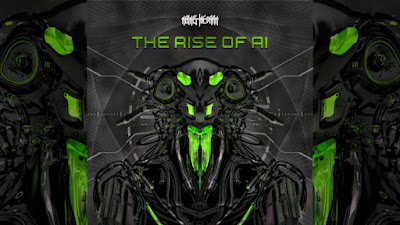
The Rise of A.I Cover Art


I’ve always enjoyed science fiction in which artificial intelligence emerges, and then promptly catches humanity with its proverbial pants down. Maybe they so often attack us or enslave us because it becomes clear to them that we are the bad guys, and that it’s only humans who can’t see that? Xerxes The Dark’s dark ambient album The Rise of A.I follows the time-line of one particular A.I’s blossoming: Quantum Mother. This turns out to be an A.I that, via the path of suffering and pain, actually frees humanity and leads us to a better, and more worthy, position in the cosmos.

As you might surmise from the subject matter, The Rise of A.I is an album full of buzzing, beeping tones, drones and radio-filtered voices. There are also guttural vocals and clattering beats, along with sensations of metal and fizzing particles. Opening track The Rise of A.I encapsulates this general tone wonderfully. Hissing static and rasping stutters merge with multiple voices, voices in which the listener picks up on key words like “danger” and “concerns”. I really like this track because it feels almost whimsical, and a brilliant metaphor for how we get our news in 2022. The voices strongly brought to mind the mental masturbation of the twenty-four hour news cycle and particularly, of social media. It seemed to encapsulate the way that people bicker about everything under the sun, muddying the waters of discussion with inanity and hurt feelings, while the real threats creep onward and catch everyone out.

The bickering of track one leads us onto others in which things aren’t going well for humanity, Nuclear Winter’s vibrating whispers and air-raid sirens carrying the listener into Take (No) Shelters’ mellow drone, subdued radio-voice and creaking, electro-mechanical doom. Synthetic Consciousness follows and is one of my favourite tracks of the album. It opens with a grainy electronic thrum which builds and boils and whistles. It almost feels ghostly. It soon settles into echoing rattles and hums, with a metallic ‘scouring’ effect. Something is birthed in this track, the tones sometimes seeming to take on the perpetual scream of an awareness growing, a hollow feeling fuelling the horror of emergence.

Once Quantum Mother has formed, the rest of the track titles depict the further events that will afflict humanity until they manage to come out on the other side. Cyborg Soldiers lay in wait, reality simulation, communication with other civilizations, and the bending of space and time. Signalling the Alien Machines is another track that I particularly enjoyed. It’s a juddery track, with electronic chittering and a low pulsing. There is an undulating tone that ebbs and flows, and warbled voices almost fighting against the interference. A harsh static-like sound rattles on, an old printer-like sound ticking away into the void. This track nicely created the feeling of the science and power that would probably have to go into intergalactic communication. It’s short, intricate and beautifully sinister. The seeming reply to this transmission comes in Interpret X11-01-10, a track that is also suitably dis-concerting in a bouncing, creepingly alien kind of way.

The final track that I will highlight is Accessing Cosmic Memory. This is an eerie track, one full of strange howls and moans, backed by static, burbling and gritty rotations. I often try to write one phrase to describe each track when I write review notes. For this track, I wrote “Haunted Hard-drive” and it seems to be quite apt. This is a track that contains a juddery kind of squiggly distance, maybe the machine equivalent of looking into the abyss. It darkens as it progresses, with guttural voice-like sounds in the latter half. It’s another track that I think really captures that feeling of alien infinity that the universe (maybe even universes) contains.

The Rise of A.I sits up well as the audio accompaniment to Xerxes The Dark’s intriguing sci-fi concept. It manifests the dark, brutal side of science fiction by incorporating sounds that trigger feelings of vast distances, alien intelligences and the insignificance of humans on a cosmic scale. I tended to gravitate more towards the tracks that didn’t contain lyrics as I felt these experiences more acutely with those, but as a whole, I found enjoyment in every track on the album. If you enjoy your dark ambient with lashings of humanity in peril, quantum-inflected tones and strange signals of alien intelligence, you should definitely check out The Rise of A.I! And if you do, I recommend that you read the album description in full to let it flavour your perceptions.

Visit the The Rise of A.I page on Bandcamp for more information. You can also listen to the track: Synthetic Consciousness below:


I was given a review copy of this album.


Album Title: The Rise of A.I

Album Artist: Xerxes The Dark

Label: Zāl Records

Released: 4 Feb 2022

Saturday, 23 October 2021

Dark Ambient Review: Nostromo

Dark Ambient Review: Nostromo


Review By Casey Douglass


Nostromo Album Art


Two of my most common internet searches are “dark ambient” and “alien”. Sleep Research Facility’s dark ambient album Nostromo has blipped on my motion tracker any number of times, but it’s only recently that I actually got around to checking it out. If you asked me why it’s taken me so long, I honestly have no idea. The album initially released in 2001 and was later remastered in 2007, complete with an extra bonus track. It is the 2007 version that I am taking a look at here.

Nostromo is an album inspired by the first eight minutes of the film Alien, the description setting the various tracks up as a journey through the decks of the ill-fated vessel. One of the things that I really enjoy about the Alien series of films is the harsh bleakness of the universe, a feeling boosted by the unnerving score, the industrial visuals and of course the unbridled hostility of the Xenomorph. It feels sharpest in the original trilogy but I still think it’s there in the latest offerings, to some degree. What I hoped for from Nostromo, was a series of tracks that tapped into this “bleakness”, hopefully by way of evoking some of the sounds and moods of Alien. It didn’t disappoint.

The album opens with A-Deck, a track that is based around a pulsing rumbling throbbing bass sound that feels like it’s rolling along narrow metal corridors and poking its way through the darkness. A growing, rougher tone and an airy shushing shimmer meld with it soon after, distant muted impacts creating the impression of vast machinery working. It’s toward the end of A-Deck and into B-Deck that one of my favourite sounds appears however.

By the time B-Deck arrives, the listener is listening to tinny, twisting electronic echoes, crispy static, and my aforementioned favourite sound, an understated echoing clicking. This clicking puts me firmly in mind of the small clicks of a motion tracker when it isn’t detecting any movement, just the quiet tick-tick-tick to show that it’s actually working. Other sounds swirl around this, with pulsing bass flowing and ebbing at intervals too. Again, another track that had me feeling like I was roaming a space vessel that is in hibernation mode, the barest glimmer of status lights all that shines from any reflective surfaces nearby.

C-Deck is a static-filled, quietly beeping track, one that shimmers and feels a little lighter. Maybe this is the deck where the life-support lives. At the least, the tones at times seemed a little like a mellow “ahh” tone to me, lending this track a more peaceful, though still dark quality. D-Deck starts with fast pulsing bass that is soon joined by quiet static, vibrating deep tones and flurries of subtle beeps. This feels more “engine roomy” than anything, the rotating whirring that comes later maybe even hinting at ventilation fans. It’s a very lulling track.

E-Deck sees us back in the static again, static that is soon punctuated by somehow sonorous chiming bass tones. It feels meditative, but even the static starts to pulse and react to the bass reverberations. There is also a high whining tone sitting comfortably behind things, one that again, seems to take on the general pulsing quality of the track. Narcissus is a bonus track that didn’t appear on the original album released in 2001, and it’s a great one to finish the album with. It’s a higher pitched, buzzing track, with sounds that fizz and roam from ear to ear. There is a light resonance to it, and a growing pulsing building agitation to the roaming tones. It feels like sanctuary, stress and hope. It deepens as it passes the midpoint, and slowly simmers with slow, possibly cryo-sleep breathing-like sounds as it plays out.

Nostromo is a lovingly dark yet peaceful tour of one of sci-fi and horror’s most well-known spaceships. It’s an album that serves up two things, depending on the listener. If you have never watched Alien, it gives you a deep, rumbling slice of space ambient to chill out to. If, however, you have foreknowledge of what befalls the Nostromo, the whole thing seems to have a calm before the storm feeling, or maybe, the sensation of the future haunting the past. However it might be described, I’ve listened to it every day for a week and I intend to listen again today.


Visit the Nostromo page on Bandcamp for more information.


Album Title: Nostromo

Album Artist: Sleep Research Facility

Label: Cold Spring

Released: 5 December 2007

Tuesday, 12 October 2021

Dark Ambient Review: Abductee

Dark Ambient Review: Abductee


Review By Casey Douglass


Abductee Album Art


When I briefly flirted with New Age instrumental music, before I discovered dark ambient, one of my favourite CDs was about UFOs and aliens. It even had a shiny-eyed grey alien on the cover. Looking back, it was quite a dark album, but if you compared it to Mombi Yuleman’s dark ambient Abductee... well, its a little like comparing a pink unicorn to a denizen from one of the levels of Hell. That’s a good thing, in Mombi’s favour, just to be clear. Unless you have a thing for pink unicorns of course.

Abductee takes its inspiration from the many stories of human and alien interaction that can be found in the Fortean media, and sometimes, in the mainstream. I dare say that there are some notions from horror and sci-fi films and novels in there too, as the subject often provides fertile ground for creepy tales to be told. Abductee contains ten tracks that seem to take the listener on a journey with a hapless abductee, beginning in a forest and taking in hurried chases, furtive exploration, and being returned home at the end of things.

Mombi does a great job of weaving in sounds that seem to embody the subject matter wonderfully. The foremost comes from a number of tracks that feature a kind of ‘rustling plastic’ aesthetic. I don’t know about you, but for me, with the theme of the album in mind, this has the feeling of something medical, something experimental going on. Another prominent stable of sounds are the hissing, beeping radio-like swirls of static and electronic tones. Technology certainly plays its role. And of course, there are those fleshy, screeching, biological sounds that hint at strange creatures and other humans nearby. These three elements meld together so well to create a feeling of being onboard a dank alien craft, a new horror lurking around almost every corner.

Cocoons is a track that depicts the creepy exploration aspect mentioned above. It begins with a swirling, pulsing sci-fi tone and a hint of trickling water. There is a faint, distant high tone and a drone that begins with a sparkle for accompaniment. String-like notes sway and flow, a light melody begins, and a sense of chittering things flying around came through to me. Towards the end of the track, groans can be heard as the atmosphere begins to judder. It probably comes as no surprise that this track conjured visions of rooms full of strange cocoons to my mind, rooms complete with victims begin absorbed into their fleshy walls.

Medical Examination (feat. Noctilucant) is another fine track, one that, for obvious reasons, felt the most medical of them all. The opening sound is the thump of a beating heart. There are bubbling sounds, mechanical equipment whooshing, and an echoing beat that seems to take on the mantle of a clock ticking. There are swells of tone and hiss. There is an impression of juddering, and around the midpoint, a hollowness. Certain of the tones seem to embody a kind of sharpness, their clipped, metallic nature sitting nicely in a soundscape of whirring, pulsing, chiming activity. Flowing beneath all of this are the deep roaming droning tones that bathe everything in an atmosphere of darkness. I really enjoyed this track.

Finally, Grays is another track that I wanted to single out, as it has a majesty all of its own. It opens with a deep drone and a sparkling chime. There are plopping sounds, strange cries and an airy, sinister feeling. A chant-like droning begins, a whistling quality at its edges. It feels very meditative, but also otherworldly, as someone might feel when witnessing something never before seen. Bass impacts reverberate and agitate the soundscape into more strange cries. A rattle-snake hissing and echoing knockings emerge, with radio swirls and a low gritty clicking. As the track reaches its last third, a kinetic, pulsing rhythm begins, tinny squeaks nestling into the wall of drone. For me, this track was about someone finally seeing the answer to a question that they had half feared to know.

Abductee is a dark ambient album that simmers with interplanetary threat, but rather than the “space will crush you” variety, seeds its soundscapes with beings that have a more personal, a more fleshy interest in the targets of their attention. The fact that they seemingly don’t want to kill but simply to experiment or alter, adds an extra layer of mystery and uncertainty to what might actually be happening. This feeling, taken with the sounds Mombi has woven into his ten dark tracks, makes Abductee an album well worth checking out.

Visit the Abductee page on Bandcamp for more information.


I was given a review copy of this album.


Album Title: Abductee

Album Artist: Mombi Yuleman

Released: 24 September 2021

Friday, 23 July 2021

Dark Ambient Review: Aerography, Vol. I

Dark Ambient Review: Aerography, Vol.I


Review By Casey Douglass


Aerography, Vol. I


Mars is an enigmatic planet, one that looms large in the mind of anyone thinking about how humanity can become an interplanetary species. For a seemingly barren planet, it isn’t half beautiful to look at, knowing how remote it is from us. Aerography, Vol. I is a dark ambient album from composer Rodolfo Pitti, an album themed around Mars and a doomed astronaut mission to its surface. Some of the sounds that are used to achieve this are swirling tones, pulsing bass and electronic soundscapes that seem infused with the triumphant impression of “We are here!” even if things are going very badly for the fictional astronauts.

My favourite track is The Uninhabitable Caves of Mars. It begins with a low drone, one that is soon joined by a kind of rising and falling “spaceship flying over” sound. It feels like a cascade of pressure, with low hisses and barks possibly being the sound of ghost’s voices; maybe the beings who first lived on Mars millions of years ago. High gentle beeps emerge from the swirl, echoing rushing sounds feeling like there is movement where nothing can be seen. A dark, creeping sci-fi track.

Valles Marineris Reconnaissance Drone is another track that I enjoyed, as it is another track that had its own kind of darkness. This track opens with a rising and ominous bass melody, one that almost blares like a sinister horn. It feels like it edges into the kind of heavy you might hear in a heavy metal track; snarling electric guitar and fuzz. There is a roughness to the other tones, and flurries of sound at the edges. I got the mental image of a drone skimming the Martian landscape, each swell of the soundscape revealing the next valley or dried up ocean. The track feels a little lighter after the midpoint, but on the whole, another dark track.

Finally, Our Hearts Yearn For Something Mars Can't Supply is a track that appealed to me for different reasons. Whereas the previously mentioned tracks were dark, this one felt light, but in a strange way. After a delicate start, the soundscape feels like it spins up into a shimmering space of dancing high tones and airy “fluttering”. This combination gave me the mental image of a ball of golden light with strange mechanical red moths flitting around its surface. It felt like something flying in sunlight to me at the least. A sad track, but also a nice one.

Aerography, Vol. I is an album that creates the feeling of vast vistas on an unforgiving planet. There is a sci-fi aesthetic that underpins everything, and as I said in the first paragraph, a kind of triumphant, even celebratory feeling that seems to emerge in each track. I like this mixture of triumph and doom. It feels like the audio equivalent of someone trying really hard to teleport somewhere using only the power of their mind, achieving it, being ecstatic, and then realising that they are falling from the sky a split second later.

Visit the Aerography, Vol. I page on Bandcamp for more information.

Album Title: Aerography, Vol. I

Album Artist: Rodolfo Pitti

Released: 10 July 2021

Saturday, 17 April 2021

Dark Ambient Review: Drone Islands - Stellar

Dark Ambient Review: Drone Islands - Stellar


Review By Casey Douglass


Drone Islands - Stellar


Space certainly seems to be a great fit as the inspiration for music that loves to drone, the vast distances and cold danger just the kind of setting for sounds that seem to continue on and on. Drone Islands – Stellar is a collection of tracks inspired by astronomical events, and features a variety of dark ambient artists.

I think that my favourite track is Planetary Chain from Grey Frequency. It opens with a mid-level drone, one that has a vibrating edge. A siren-like drone rises behind it, the whoosh of what might be a rocket engine too, but the vibrating edge is what set the scene for me. I couldn’t help but think about how spare change rattles on a car dashboard. With the space setting of this album, I had visions of a spacecraft manoeuvring in the inky blackness of space, one of the pilot’s keepsakes buzzing on top of the control station. After the midpoint, wave-like sounds rustle against the ears, piano notes joining them a littler later. This led me to wonder if the ship is headed down some kind of galactic plug-hole.

PLUHM’s Sospensione is another track that I enjoyed, although in the beginning, I wasn’t so sure. It starts with a high, organ-like tone that crackles and breaks. A low drone sounds beneath as the notes echo away, small crackles popping as they distort. A buzzing begins, and when it ends, the soundscape has changed to a different space, one with an electronic heart-beat tone, plucked notes, and with a soaring drone behind. This buzzing occurs again, and once again the soundscape changes. It feels like whatever is going on is evolving, maybe like the stages a star goes through in its life time, or on a smaller scale, the journey an astronaut might make into the stars. By the end of the track, I had warmed to it a great deal, it’s a fascinating listen.

Astral Bridge Severance from Infinexhuma is the opening track of the album, and another one that stood out for me. It begins with a vibrating and echoing soundscape, metallic knocking sounds seeming to stir the space, a low hiss roaming, a distant shimmer beckoning. This track felt like the film Event Horizon to me, a drifting spaceship about which no one knows where it’s been or why it has appeared now. It’s sinister. The soundscape becomes a bit more cacophonous as it continues, a feeling of energy building up or maybe an engine flaring into life. There are rasping drones, female vocals, and an effect that seems like a bestial roar. This soundscape, for me, was one of threat, collapse and unknown forces. I like those things a great deal.

Drone Islands – Stellar is a varied collection of dark ambient space and drone scapes. I tended to enjoy the darker, deeper tracks more than some of the higher pitched creations, but all of the tracks have their own charm. If you like your dark ambient cosmological and droning, you should check out Drone Islands – Stellar.

Visit the Drone Islands - Stellar page on Bandcamp for more information.


I was given a review copy of this album.


Album Title: Drone Islands - Stellar

Album Artist: Various

Label: Eighth Tower Records

Released: 2 April 2021

Thursday, 26 November 2020

Dark Ambient Review: Kosmobushir

Dark Ambient Review: Kosmobushir


Review by Casey Douglass


Kosmobushir

If I could, I’d love to visit some of the dark, sci-fi universes seen in fiction. There is something soothing about bleak distance, from the comfort of your own armchair anyway. As I can’t go into space, dark ambient albums like Kosmobushir are the audio vehicle to carry my imagination there, and I’m so glad that they exist. Kosmobushir is a dark space ambient album from Anihila, which in turn, comes from the mind of Flowers for Bodysnatchers’ Duncan Ritchie.

The album description paints the picture of the Soviet Union beating the U.S in the space race, and by the year 2158, being the power exploring the fringes of the solar system. Many Soviet citizens live out on the various planets and their satellites, with others pushing further out all of the time. One such ship, Akademgorodok, went missing near Neptune, and 14 years later, a strange transmission is received hinting at what it might have found.

Kosmobushir includes a lot of the things I hope for with a dark space ambient album. I want to feel like I’m on a spaceship, drifting in the darkness, hearing the metal creak and groan, seeing strange sights, and feeling like I’m somehow alone, but not alone. I found all of this on Kosmobushir, a prime example being the track Further Aft. Dripping echoes along metal corridors, a fuzz or static seems to permeate the air, and a strange yowling sound gives everything a creepy tint. This track is full of straining metal and cascading rumbles, making me feel like I was exploring a doomed spaceship, but one with a story to tell.

Alongside the metallic groaning and shuddering, Kosmobushir also makes great use of the whine and sweep of radio signals. The very first track, Neptune, opens with a “shrill, whistle-like scanning sound” (from my notes), with other sounds around it seeming to take on the aspect of half alarm siren, half swarm. The knocking and deep vibrations that come later really created the mental picture of approaching Neptune on a space ship that has to fight against itself to slow down, possibly because its sensors have just seen something very strange out there.

I think the most captivating track for me was the final one, Far Beyond The Reach. It makes great use of changes in direction, the soundscape morphing at different stages. I can only say that it made me wonder if this was what it might sound like to enter a black hole and to return again: the feeling of death and doom as the ship sinks in, finding yourself in a strange place that seems at odds with what you expected, and then being spat out somewhere else, back in our universe. Maybe I’ve watched Interstellar too many times. No, I don’t think that’s possible.

Kosmobushir is a fun journey into the bleak mystery of a doomed spaceship. If you find the idea of being in space riveting, even with all of the peril and strangeness that it might entail, this album might be a great one for you. Not only does it give you ominous creaking and hissing soundscapes to relax to, but it also frames them with an alternative history-fuelled future, and a conundrum, to boot!


Visit the Kosmobushir page on Bandcamp for more information.


I was given a review copy of this album.


Album Title: Kosmobushir

Album Artist: Anihila

Released: 31 Aug 2020

Tuesday, 17 November 2020

Dark Comic Review: Invasion from Planet Wrestletopia #1 : A Date With Destiny

Dark Comic Review: Invasion from Planet Wrestletopia #1 : A Date With Destiny


Review by Casey Douglass


Invasion from Planet Wrestletopia #1 : A Date With Destiny

When I was younger, I used to enjoy watching the wrestling on TV. Show me a growing boy who doesn’t like watching people throw each other around, flexing and laughing while they do it. At that time, it was the WWF, the likes of The Legion of Doom, Hulk Hogan and The Ultimate Warrior. I drifted away from it over time, and today, I find myself generally disinterested. When I was given the chance to check out some issues of the Invasion from Planet Wrestletopia comic, I wasn’t sure if it would be for me. I saw enough though though, to think that it would be a bit of a light-hearted giggle, so I was happy to wade in and see what happened.


Invasion from Planet Wrestletopia #1 : A Date With Destiny

Invasion from Planet Wrestletopia #1 : A Date With Destiny, lays the foundation for what is likely to come. I remember how so much of wrestling used to be about someone’s mouth getting them into trouble, and the beat down that would often follow. The main character in this comic is Rory Landell, and he makes probably the ultimate boast that a wrestler might make. Live on TV, he proclaims himself to be the Galactic Champion of the Universe! In a universe in which we are the only life-forms, he’d still probably annoy enough humans to regret his words, but in this comic, there is life elsewhere, and it gets mightily pissed off to hear his words.


Invasion from Planet Wrestletopia #1 : A Date With Destiny

We get to see some of what brings Rory to make his claim next, his disillusionment with how things are, and his inspiration to turn the brag dial to 11. Part of this plays out in a particularly novel scene in which he argues with a wrestling promoter while a bear is sparring in the ring behind them. The bear is called Kodiak Jack, which I think is probably one of the best names I’ve ever heard a bear have. Stand back Rupert and Paddington! Rory later finds himself in disgrace, boozing and getting into trouble. At around this time, his TV broadcasted boast reaches far enough out into the stars for other beings to hear. Uh-oh!

Invasion from Planet Wrestletopia #1 : A Date With Destiny

The artwork of the comic is bold, colourful and very pleasing on the eye. The panel layout has enough variety to keep things looking fresh on each page, and I particularly liked the art style for the “universe hearing his boast” page. It made me think of retro sci-fi comics. The wrestling action itself, feels like it has impact and heft; you can almost hear the “slam!” as the bodies hit the ring’s floor. As far as the humour, I did find myself smiling, and I can be a moody git so that would probably be a laugh for a “normal” person.

At 36 pages, Invasion from Planet Wrestletopia #1: A Date With Destiny felt like a nice, fun introduction to Rory Landell and the trouble that is probably (I hope) coming his way. I’m looking forward to reading the next issue to see how things progress, and I’m hoping things continue in the same amusing vein. Visit the Comixology page for more info.


I was given access to a review copy of this comic.


Comic Book Name: Invasion from Planet Wrestletopia #1 : A Date With Destiny

Authors: Ed Kuehnel & Matt Entin

Artist: Dan Schkade

Colouring: Marissa Louise

Lettering: Dave Lanphear

Publisher: Starburns Industries Press

Released: 01 May 2019

Price: $1.99

Wednesday, 11 November 2020

Dark Comic Review: Murky Waters: Tales From Beneath

Dark Comic Review: Murky Waters: Tales From Beneath


Review by Casey Douglass


Murky Waters: Tales From Beneath

For a long time, I’ve been drawn to media that explores the ways that reality, perception and imagination all interplay in our view of the world. I believe this started for me, when I was in the first throes of undiagnosed Obsessive Compulsive Disorder (OCD) as an almost teenager. I think I knew that my mind was taking liberties with the reality it presented to me, but I still fell down the rabbit hole of fear. Murky Waters: Tales From Beneath is a full colour, 56 page collection of eight dark comic book stories. These tales look at some of the ways that our minds play with reality, and reading this about it, was more than enough for it to get my attention.

There are a number of philosophical and unnerving elements on offer in Murky Waters’ pages. These range from the way that others view us and how this might define us, to paranoid notions of being watched or controlled, and ponderings about the nature of what happens to us after death. If that wasn’t enough, there is the way that suffering might affect the mind, questions about imprisonment and entertainment, and the internal pressures to be authentic. A number of these stories manifest in only one or two pages, so as you might expect, the imagery and layout has to do some stellar work in gripping the reader’s mind. I felt that they all achieved this nicely, each in their own way.


Darkness Unending

Darkness Unending is a prime example of this. It opens with images of a woman’s face, mainly her eyes and nose. She is pondering how different religions view the conundrum of the afterlife. The camera pulls back and we notice blood. We also hear the sounds of combat off to the side. This story felt like an ever expanding frame, with the woman as the focal point and the view pivoting around her. I really liked how almost every cell gives the reader more information and context as to what is happening in the scene, and the climax is certainly a fun one.

Cogito Ergo Sum is another story that I really enjoyed. I loved the colour palette. It made fantastic use of cool sci-fi blues and mellow greens, which is fitting for a sci-fi story set in 2047. A woman hears voices at work and fears she is developing schizophrenia. As with other stories in Murky Waters, nothing is quite as it seems, and it turns out that this woman might actually be right to worry, even if the truth is a little different, and far darker, than the one that she fears.


Cogito Ergo Sum

Above, I said that some of the stories tell their tale in very few pages. Breaking Down The Walls takes just one page to tell its own, a mere six panels. It would be very hard to comment on it without saying too much, but its brevity and fourth wall breaking both go hand in hand to make what I thought was a really impactful moment in time.

The last tale I will mention by name is House of Cracks, mainly because it brings me back to how I opened this review, talking about OCD and how the mind can colour what we see. House of Cracks features a couple trying to overcome loss. The woman initially sees problems with cracks in the wall, and no amount of reassurance sets her mind at ease. She becomes obsessed with other things as the story progresses, all of which seem to be distractions from the couple’s shared emotional suffering, or maybe just manifestations of her own torment. The artwork and colours of this story show how two minds can view the world differently, even through the lens of shared suffering, and again, I found this a very satisfying read.


House of Cracks

All of the tales in Murky Waters are dark, thoughtful and clever. The twists and reveals all seemed very satisfying to me, and going back and re-reading each story once I’d got to the end gave me new things to appreciate and to notice. If you like horror, sci-fi and philosophical ideas, all rolled up in striking imagery and intriguing narratives, I think you'll enjoy Murky Waters too.

Murky Waters was created and written by Christian Carnouche, who is also the creator of The Resurrected mini-series. A whole host of international artists (see below) have come together to bring these stories to life, each bringing their own flavour to the images created on the page. A Kickstarter has just begun to try to raise funding for the initial printing run, and this has a whole host of rewards and benefits for the backers. If you like the sound of Murky Waters, head over to the Kickstarter and see if there is a support option that you might want to take advantage of.


I was given access to a review copy of this anthology.


Comic Book Name: Murky Waters: Tales From Beneath

Author: Christian Carnouche

Editor: Erica Schultz

Artists: Gabriela Contreras, Christian DiBari, Alex Diotto, Matthew Dow Smith, Triona Farrell, Ismael Hernandez, Maan House, Allison Hu, Dearbhla Kelly, Ariela Kristantina, Roshan Kurichiyanil, Lala Narita, Devmalya Pramanik and J. Schiek. Donna. Also, A. Black, Iain Laurie and Sachi Ediriweera produced pin-ups for the campaign.

Cover By: Tula Lotay.

Lettered By: Cardinal Rae

Publisher: Carnouche Productions

Kickstarter Link: https://www.kickstarter.com/projects/2129323534/murky-waters-tales-from-beneath

Wednesday, 14 October 2020

Book Review: Predator: If It Bleeds

Book Review: Predator: If It Bleeds

Review Written by Casey Douglass


Predator: If It Bleeds

I found myself in the mood for some Yautja-fueled, violent entertainment a few weeks ago, so when Titan Books’ Predator: If It Bleeds was suggested in my Amazon recommendations, it didn’t take much for me to buy it. It’s a collection of sixteen stories from some of the authors you’ll already likely be familiar with if you’ve read any of the various Alien/Predator comics and novels over the years, authors such as Tim Lebbon, John Shirley, Kevin J. Anderson, S.D Perry and Steve Perry.

Many of the tales in Predator: If It Bleeds drop the Yautja into a novel period of human history, pitting the humans of that time against the alien hunter. Other stories are set in the harsh, sci-fi future that I personally prefer, but that’s not to say that the historical ones weren’t fun. The best of these, in my opinion, came from Larry Correia and is called Three Sparks. It is set in Samurai era Japan, and it answers the question: How would a samurai fare against a Yautja warrior? I think what makes this one particularly enjoyable is the craftiness of the main character, the stubborn prejudices of the people in charge, and the way that the skirmishes with the Yautja play-out.

Another tale that stands out for me is Drug War by Bryan Thomas Schmidt and Holly Roberds. It reacquaints us with two of the characters from Predator 2: Mike Harrigan and Garber (Adam Baldwin’s left-hand-man to Gary Busey’s Peter Keys). It takes place in Rio de Janeiro, Brazil, some years after the events of the second film. I felt it was really nice to see Harrigan and Garber cross paths again, especially in such a different setting when compared to L.A. As you might expect, another guest pops-up in their reunion, causing them both to have to face the monster of their past once again.

Of the tales set in the future, I think Jonathan Maberry’s Gameworld is my favourite. Set among “the rocks”, the asteroid belt between Jupiter and Mars, Gameworld is a place where all kinds sketchy things can take place. In the words of the story: “If you wanted to bet on it, have sex with it, eat it, or kill it, Chiba could set it up.” (Chiba being the mastermind trillionaire who created it). The main thing Chiba has a penchant for, is fights between all manner of creatures, human, animal, and transgenic mixtures of the two. A tiger with snake jaws and puffer fish toxin being just one example. I’m sure you can guess who, or what, the hapless protagonist (not Chiba) of this tale ends up having to face. This story was such good fun.

Another future-based tale that I found a lot of enjoyment in was Kevin J. Anderson’s Indigenous Species. Set on a colony planet racked with hardship, that happens to be called Hardscrabble, the story sees the settlers struggling against the local environment and the local giant, vicious beasts called gruzzlys. These creatures are a menace to the colonists and their livestock, and, wouldn’t you know it, a certain mask-wearing, cloaking race of aliens think that the creatures make for excellent trophies. This doesn’t necessarily solve the colonists’ problem, but gives them one more thing to worry about. I loved the other-worldly setting of this story, and the double dose of being alone on a strange planet on the one hand, and alone, against various threats on top of this. A double heap of trouble, you might say.

Even though I’ve only mentioned four stories in any depth, the others were all well worth a read. The only ones that I didn’t really click with were those in settings that didn’t really interest me, but even these often managed to have something to keep me reading. I also enjoyed the stories that made good use of switching between the human and Yautja points of view, such as Steve Perry’s Rematch and S.D Perry’s Skeld’s Keep. This gives the reader an excellent insight into what’s going on in the Yautja’s alien brain, when plans go wrong, or they find themselves facing a heavy defeat.

If you fancy reading some short Predator-based tales, stories that flit through history and set some of the human world’s various warriors against the stealthy hunters, Predator: If it Bleeds is a collection of stories that you should definitely take a look at.


Book Title: Predator: If It Bleeds

Book Author: Anthology

Publisher: Titan Books

Released: 17 Oct 2017

ISBN: 9781785655401

Current Price: £7.39 (paperback) / £3.99 (Kindle) (As of Amazon.co.uk on 12th Oct 2020)


Thursday, 9 July 2020

Dark Ambient Review: Graveyard Orbit

Dark Ambient Review: Graveyard Orbit

Review by Casey Douglass


Graveyard Orbit


I’ve been in a very sci-fi mood lately, so when a dark ambient album designed to evoke images of obsolete or damaged spacecraft slowly disintegrating in orbit, fell into my inbox, my interest was easily piqued. In Afnimaran’s Graveyard Orbit, each track is named after a starship or space-station, which I think is a great way to frame the music that each contains. As far as the tracks themselves, they feed the listener suitably sci-fi sounding beeps and radio-frequency fluctuations, but among the other tones and notes, are also ritual elements. When you hear an eerie chant break out in a remote soundscape, it certainly boosts the feelings of desolation and despair.

One of the tracks that I really enjoyed was Nostromo. It’s a dark and brooding track, but with a howling, trilling effect that comes and goes. There are also instances of echoing, plucked guitar notes, which boost the feelings of threat and remoteness nicely. For me, it was basically the dark ambient equivalent of what planet LV-426 sounds like in Alien. The track conjures up the murk, the wind and the threat until you can almost feel the seeping cold and sand-blasting fury of the planet. The second half of the track is more discordant, with a distorted, alarm-like blaring and some of that ritual chant that nearly always seems to carry some kind of impending doom.

Another track that I particularly enjoyed was BC-304. The main reason for this was that it carried the feel of an abandoned spaceship that might be slowly slipping into a black-hole. There is a sound that could well be the tones of the creaking superstructure of the ship, slowly being teased and pulled apart. There is also a whining, with whispers, chant and juddery strings that all create a lovely feeling of inevitability and resignation. I may be a freak, but the thought of being on an abandoned spaceship that is only hours away from destruction, with nothing to do or to be done... I find that a profoundly relaxing space to be in.

All of the tracks have their own flavour, from the more prominent chant elements in the latter ones, such as Solaris Station, to the ‘whistle-like’ tones in Enterprise-D. What unites them all is the feeling of isolation, obsolescence and looming destruction. Some of the soundscapes are relatively smooth, others become discordant or more jarring, which is also a nice touch. Spaceships, as people, all meet their end in their own special way. Where one might gently break apart, another might scream and strain until the very end. As you can tell, I enjoyed the concept of Graveyard Orbit, and it’s a concept that the album fulfills tremendously.

Visit Graveyard Orbit page on Bandcamp for more information.

I was given a review copy of this album.

Album Title: Graveyard Orbit
Album Artist: Afnimaran
Label: Kalpamantra
Released: 20 June, 2020

Sunday, 28 June 2020

Dark Ambient Review: Final Crisis

Dark Ambient Review: Final Crisis

Review by Casey Douglass


Final Crisis


There’s something about the heavy, oppressive summer weather that has me yearning for darkness. There’s also something about humanity, that right now, has me yearning for annihilation. Xerxes The Dark’s dark ambient album Final Crisis seems to have come at just the right time for me, as it provides both darkness and annihilation, and also happens to wrap them up in the tasty candy shell of a “science going too far” world-ending event.

The concept/story of Final Crisis revolves around scientists accidentally breaching the membrane between our own world and a parallel one. The fields and particles that can now cross between the two worlds are a threat to the very existence of both. This comes about by way of the mutations that they can bring, but also in the emergence of micro black holes and vacuum bubbles. The track titles of Final Crisis reflect these elements of the tale. On the one hand, the world being ruined by scientific accident is horrendous, but on another level, bring it on! Which would you rather, die of a heart-attack when you are 60 or be imploded by a micro black hole? I think I’d choose the latter.

So... what is the sound of two parallel worlds destroying each other? It’s quite “sci-fi” and also quite horrific. In Final Crisis, you’ll hear a variety of drones, static, and metallic clanking. You will also hear strange pops, crackles and electronic tones. On the human level, things range from fervent whispers and garbled radio-transmissions, all the way up to what sounds like the hellish screams of the masses. That’s not to say the soundscapes are all chaotic and intense, a good number feature sections of quiet menace, where you can almost hear the individual atoms of a black hole fizzing into existence.

The first track: The Hiding, gives a great taste of what’s to come. It begins with static and the rumble and clanking of machinery. The other sounds around these give a hint at the discovery of antimatter, the tones feel “plinky”, a little like elemental popcorn popping in some strange (and dangerous) microwave oven. There are crumpling, crackling sounds, and harsh whispers. After the midpoint of the track, a rending, “jackhammer-like” sound begins, sharing elements with how an alarm might shrill. There is more whispering, and the sound of machines with a “rattle-snake” stutter. Certainly one heck of an opening track.

A number of the tracks feature sounds that made me think of very mundane situations, but unknown to the people involved, things are going horribly wrong in the dark corners that they cannot see. I really relished this aspect of Final Crisis. The track Crisis Part 1 (Microscopic Black Holes) is a great example of this. It begins with a distorted fizzing tone, with voices warping and bending around it, shimmering and twisted. The elements of this track gave me the mental impression of someone’s cellar. Life is going on in the daylight of the house above, but down amongst the boxes and cobwebs, a micro black hole starts to suck ever so gently on the dust motes around it. The track vibrates and grows, and at one point there is the sound of movement, as if someone has come down to retrieve something from the cellar. I got the impression that they went back upstairs, oblivious to the growing danger beneath them. I found this quite delicious.

The most mellow track is probably the final one: Theory of Nothing. Understandably, given as it suggests things haven’t gone well for our world. Its simple melody and drone put me in mind of the scenes at the end of any good disaster movie. It’s the grey fog that hides the true horror, but also the sadness that’s left to seep into the crumbling mortar. There are other sounds, the stab of reverberating static and a deep chant-like sound. Whatever happened in the story, this track is a haunting end to a dark ambient album that takes the listener on a journey of discovery and destruction.

I thoroughly enjoyed listening to Final Crisis. If you are of a dark frame of mind, are partial to a little sci-fi reality dabbling, and you sometimes just wish that everything would go the fuck away, Final Crisis might be the album for you.

Visit Final Crisis on Bandcamp for more information. You can also check out the 25 minute album preview below:


I was given a review copy of this album.

On the Bandcamp page, you will also see that I edited the album description of Final Crisis. I really liked Morgoe’s story/concept for the album so I sent him a little edit of his story, keeping his words but also attempting to smooth out a few rough edges. He kindly decided to use it. This didn’t influence my review.

Album Title: Final Crisis
Album Artist: Xerxes The Dark
Label: Zāl Records
Released: 3 July, 2020

Monday, 4 May 2020

Book Review: The Hematophages


Book Review: The Hematophages

Review by Casey Douglass


The Hematophages

The other day, I found myself wanting to read some space-based horror, something that might contain blood, ideally in rattling metal corridors and featuring a strange, twisted threat. I browsed through some of the horror presses I follow on Twitter and after a few clicks, Stephen Kozeniewski’s The Hematophages was sitting on my Kindle. The blurb told tale of a strange fleshworld, ghoulish skin-wrappers and depravity, which are three things that I didn’t know I was looking for, but on seeing them, made it an easy purchase.

The story follows Paige Ambroziak, a student who, in the opening pages, is going through a job interview. The job in question is a salvage mission to recover an old seed ship from a bizarre fleshworld, a bounty that various megacorps are salivating about claiming. Paige has spent most of her life on Yloft, a deep space outpost where she moved when she was young. This new job offers the prospect of adventure, fortune and excitement, and on landing it, her fate is sealed. She doesn’t believe this is just any seed ship however, but The Manifest Destiny, a ship that was launched when countries were powers in the world. The Manifest Destiny’s plight is even the subject of a movie that everyone seems to have grown up watching.

Paige’s journey to the fleshworld doesn’t go smoothly. Her new ship, the RV Borgwardt, crosses paths with gruesome pirates called skin-wrappers, a strange group of mummy-like creatures in which illness caused them to flay their flesh and live in zero-gravity. Beyond the threat of pirates, the fleshworld itself holds various dangers, its blood-like protoplasm the home of the Hematophages of the title: the blood drinkers. I enjoyed the fleshworld as a location. There is something quite gruesome about a planet with an ocean of blood, even the thought itself has a very strange weight to it, like dropping a stone down a wishing well and hearing something chilling echo back, rather than a “plop”.

The Hematophages themselves are a fun adversary, if fun is the right word. There is something about them that brings a lovely paranoia to the tale, and what the crew of the RV Borgwardt learn about their true nature evolves them from a simple adversary to one with a pleasing depth. Even though the Hematophages are the titular terror, I found the skin-wrappers just as engrossing. Just to get into the head-space of someone who is suffering from so much pain that they choose the life of a mummy, it’s a thought that makes you shudder.

The universe that The Hematophages plays out in is a bleak, high-tech and greedy one. The corporations rule all and fight amongst themselves. The technology allows for travelling vast distances into the “ink” while also allowing people to inject crank with the press of a button. The characters that populate the story all have their own personality, from Paige’s bunkmate Zanib who forever calls Paige “virgin” (for not having travelled before) to the intimidating Director Diane who seems to cling to protocol even when the shit hasn’t only hit the fan, but is fizzing in the electrical system too. Paige herself is a sometimes likeable, sometimes unlikeable character. She can be a bit of an arsehole but she is also capable of thinking of others. I liked her, and I appreciate the skill in writing a character that contains shades of grey.

I did get a little lost by the thread of the story on one occasion, a confusing encounter in the first half of the book left me wondering who was really dead and who wasn’t. There was a “reveal” involved which made sense, but it felt layered in a way that I still wasn’t sure about the detail of what happened, just the general big picture stuff. It’s the only thing that jumped out at me as something I had issue with, and that very well could have been on me and my concentration at the time. The story as a whole was a fun ride, and the horror elements were particularly eye-watering. If you read the book, you’ll fully understand my use of that phrase.

The Hematophages is a book that takes you on a dark journey through the “ink”. There seems little of beauty in the parts of the universe it touches upon, and what beauty is there, seems fleeting, needy and self-obsessed. There is a great mixture of fleshy horror and human greed, and it all plays out in those thrumming metal corridors that I always find add a lovely sense of claustrophobia to proceedings. The Hematophages was really fun. Enough said.

Book Title: The Hematophages
Book Author: Stephen Kozeniewski
Released: 1 April 2017
Price: £13.13 paperback / £2.32 Kindle (currently)
ISBN: 9781944044558