Showing posts with label Lovecraftian. Show all posts

Sunday, 19 November 2023

Dark Ambient: BlackWeald Interview

BlackWeald Interview


Interview by Casey Douglass


BlackWeald Interview


BlackWeald is a dark ambient and experimental music creator that has produced some truly monumental albums for fans to enjoy. His latest release: The Fermi Exhibit, is themed around the Fermi paradox, which in the broadest of terms, is the question of why we haven’t detected alien life. In this interview, we talk about how he became interested in the Fermi paradox, and what his thoughts are about some of the “solutions”. We also delve into the role that Lovecraft’s fiction has played in his creative life, the value of ambiguity in creating, and what kind of equipment he uses to create his dark marvels. Thank you for reading and I hope you enjoy.

(Photos used throughout provided by BlackWeald. They depict some of the views from his local surroundings).

***

Casey: As we begin this interview, you are just over one week away from releasing your latest music creation: The Fermi Exhibit. It’s a dark ambient album themed around the Fermi paradox, the mental itch in scientists’ brains about why the sheer size of the universe lends itself to the idea that advanced extraterrestrial life should be commonplace, but that we seem to catch no sight nor sound of them. How and when did you first become interested in the Fermi paradox and what is your favourite potential solution?

BlackWeald: I was always interested in anything dark, morbid or mysterious. The nature of life, consciousness, and the insane scale of the universe are of course the oldest of these enigmas, also the toughest to get your head around.

I must state that I do not believe in intelligent design. Sure, it seems like the universe is fabricated in a way to facilitate human needs. You know the argument, if you’d change any universal constant (speed of light, Planck constant, ratio of matter-antimatter, etc.), the universe would be so different, that e.g. planets would not form, and no life would be possible. But I believe the answer for this isn’t intelligent design, rather it’s science’s most beautiful theory, the Anthropic principle. If the universe would NOT suit us, we wouldn't be here to observe it. There might be a crap-load of universes with different values of these constants, but there would be no life in them, and no observer in them to say “Hey, it seems to be 100% designed for us!”. So it’s the other way around. It’s not that the universe is designed to our needs, but we are like we are, because the universe is the way it is.

Back to the Fermi Paradox, although there are fascinating esoteric answers (which the album mostly deals with), the truth is probably much more mundane. And most likely the truth does not lie within ONE of these “solutions”, but a combination of the few. Perhaps interstellar travel simply cannot be solved, and you cannot bypass the speed of light anyhow. Combine this with the vastness of the universe and how specific a planet needs to be, to be able to develop and sustain even the most primitive life. These together would mean that although there are/were intelligent species, they are so far away from each other, that we would never ever be able to witness their existence, let alone communicate with them. It’s like an ant and a penguin inhabiting Earth alone, one in Europe, one in Antarctica. What are the chances they’d ever meet? The ant barely lives a year, they could not travel that far on land, there is the impassable ocean between them, and even if they met, they would not even recognize each other as another living being (despite these two examples descending from the very same tree of life).

In short, sure, there must be similarly intelligent life out there, but I doubt two of these species would ever come in contact with each other.

BlackWeald Lakebed

Casey: In an interview you gave to DarkUndergroundMusicZine, you touched upon your love of H.P Lovecraft. Do you enjoy contemplating the Fermi paradox because it in some ways touches the notion of cosmic horror that Lovecraft so adeptly describes, that sense of awe at the momentous forces and vast distances involved?

BlackWeald: I adore his work, he is my favourite writer. Anything Lovecraftian you can throw at me and I’ll probably like it. But I have to agree with the general consensus that he isn’t technically the best writer, rather it’s the “universe” he created and the way he tells his stories, that’s what really resonates with me. It’s very much like what Hidetaka Miyazaki does with his games. You have to piece the puzzle yourself, and even then, many things are left ambiguous. Which is great, because you can put your own thoughts, fears, feelings into these stories, making them personal. Anything that’s too straightforward, without any room for imagination, well, those are just stories. Unlike these ambiguous works, which create a framework, then it’s up to you to fit yourself into that.

I think this is what Lovecraft gets right. Instead of spoon-feeding you something tangible that he finds scary, he rather makes you think about a concept that might kick your existential dread in. “The universe is incomprehensibly large, and compared to that, you are incomprehensibly small. What do you think about it?” or “Have you ever thought of ancient civilizations that were once thriving but now are buried underneath the soil?” These are more inspirational thoughts than anything.

BlackWeald Church Ruin

I mean, one could say that Lovecraft himself made specific monsters, but I think even though we have a quite universally agreed representation of Cthulhu, it’s more about “What might lie beneath” than an actual monster.

Next to ambiguity, it’s important for me (either as a story-teller, or as a consumer) to actually take part in putting the story together, as opposed to just being told about the story. There is a very thin line between the two. Like, in a movie, when two dots should be connected, do you leave it up to the viewer to make that connection? You can give the viewer a flashback scene, or make a character say it out loud, but then the viewer does not actually participate in solving the mystery. But if you give them less, and let them figure it out, they will be like “Aha!” and it’s immediately more engaging.

Regarding how it’s tied to BlackWeald, I usually try to make my musical output ambiguous enough that there is always some room where the listeners can project themselves into. Some riddles to be solved, some connections to make yourself, something hidden, stuff that is not so obvious. This is why the song titles on The Fermi Exhibit are a bit shady. “Civilizations might be too far away from each other” not only sounds shit, but leaves no room to figure out what the song represents.

Of course it does not apply to all BlackWeald releases, e.g. Leonov and She and the Devil’s Sons follow a specific narrative, but I think it applies well for most of the others. Maybe on the “From Dust..” album the ambiguity went a bit too far and without the additional text, the framework of the album might not get through (the analogy between the timeline of a day and the timeline of a life). But e.g. with Sedna I tried to approach it in a Lovecraftian way. You know what happened, you know what it is capable of, but it’s up to you to imagine what it actually might be.

BlackWeald City Skyline

Casey: Why did you decide to form The Fermi Exhibit in the style of a museum exhibit, and what do the different sections represent?

BlackWeald: In short, if someone would have put a pistol to my head saying “You have to cut the album down to 2 hours!”, I would have chosen the first 13 tracks of the album. Fortunately I don’t have to tailor my output to any restrictions.

As a longer story, I started working on this album almost 3 years ago, right after 666 Minutes in Hell. As it happens often to me, a seemingly quick project turned into a huge monster. In a few weeks I found myself having 2000+ sound fragments and about 30 song concepts. Shaping it into finished songs seemed impossible and the weight of the project felt unbearable. So first I thought I’d slice the work up and have it released in a series of EPs. Then I got caught in the flow and during months of never-ending sessions, I finished everything at once.

When I saw that it turned out to be 8 hours long, I started cutting the fat off several songs and even threw away complete songs. I narrowed it down to 2 hours, having like a “best of” version of all the composed material, but I started missing many of the leftover material. I found myself listening to the “B-sides” more than the rest, so I just said “fuck it” and decided to keep quite a few of them. Today, I still have my own favourites in the more experimental, longer, less “traditional ambient” tracks. All that remains of this back-and-forth hassle is those two lines regarding the first 13 tracks being the “main hall” and the rest existing on the “gallery annex” of the exhibition.

Oh, and why an exhibition? Most of the stuff I release has some kind of narrative going through the whole album, but this one is among the few that is “just a bunch of tracks without any connection between them”, except for, of course, the overarching theme of the Fermi Paradox. My brain felt that I still needed to give the album a frame, which is this virtual exhibition, where each track is like a painting hanging on the wall, representing one solution to the Fermi Paradox.


Casey: When talking to The Dungeon in Deep Space, you explained that your music is created in a no budget, lo-fi kind of way, using an old PC, only using the integrated sound-card etc. Is this still the case, and what do you think that this minimalistic style of creation does for your creativity? I do a similar thing myself but it’s mainly to avoid overwhelm, perfectionism, and my OCD kicking my backside up and down all day long.

BlackWeald: Yeah, it’s still pretty much the case, although my PC aged 2 additional years, so it’s now 12 years old. Makes video rendering take ages. Although I bought the cheapest Behringer soundcard, so guitars and vocals can be recorded slightly more easily, but there are neither of them on The Fermi Exhibit.

BlackWeald Equipment Setup

The “no budget” nature is by my circumstances, not by my will. I’d love to have a dedicated room full of instruments and synths, having a top tier computer, etc, but that’s not my reality. Still, if you want to, you actually can compose and release with minimal gear and finances. Anyone saying otherwise is fooling themselves. My first few releases were made without a DAW, using only Audacity. Of course the methods used limit what the outcome can become. But, it is what it is.

Most of my favourite artists made music this way anyways. Sure, Swans has top tier gear, experience and several human talents behind them, but Dylan Carlson makes music almost all by himself, often with a single guitar only. Similarly, Hate Forest is practically one guy writing the best riffs ever and uses a drum machine. If my own favourites are often just “a dude with a guitar”, why would I fool myself thinking that gear matters the most.

I myself tend to overthink stuff by nature, so I have to keep pushing myself to accept “It’s good enough, move on!”. But also, restrictions can spark up creativity, whether they are artificial or not. So anyone planning a compilation work, feel free to ping me, as I love these kinds of works!


***

Thanks so much to BlackWeald for his time spent answering my questions. If you would like to check out The Fermi Exhibit, you can find it on Bandcamp at this link. 

The Fermi Exhibit Album Art

Sunday, 23 January 2022

Dark Ambient Review: Dagon

Dark Ambient Review: Dagon


Review By Casey Douglass


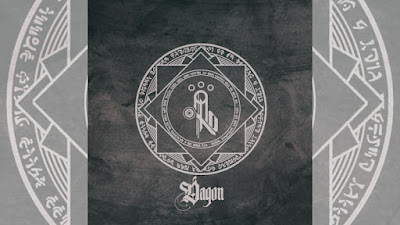
Dagon Cover Art


Something that always cuts through the bullshit of Xmas and New Years is the yearly Cryo Chamber Lovecraftian collaboration. This year’s offering is themed around Dagon, and as you might imagine, this means that the soundscapes emitted by its two, hour-long tracks, have a decidedly nautical, briny feeling.

From the very first second of track one, the sounds of waves, drones and horns fill the ear. There is a low heartbeat-like beat, a jittering chittering, whispers, and the impression of vast forces being mobilised. Your journey into submersion and the subterranean has begun, each area opening up and deepening into the feeling of vast underground places. Gaping water-filled caverns reflect back strange echoes from their walls. Trundling rasping sounds fill the mind with notions of strange machinery. Sinister vocals roam, from low distorted words to more melodic, siren-song snippets of mournful summoning.

One of my favourite moments of the album is around the six minute mark on track one. The cavernous soundscape sparkles and rasps with whispers, accompanied by muffled impacts rumbling in the distance. A drone fills the ear and laughter-like scuffling sounds pull the attention to the fringes. Strange whirring high tones seem to hint at strange creatures flocking in the dark recesses of the unseen rocky roof. It’s a pregnant atmosphere, pent up and ready to birth something horrible.

Another great section is around the fourteen and a half minute mark. The soundscape quietens and a strange female mewling vocal beckons. Water drips and trickles, and a buffeting sound ruffles the ears, much like wind blowing against noise-cancelling headphones. Twisting, smoothed notes pluck and echo away into blares of drone, the soundscape creating a feeling of being on the edge of something momentous.

Track two also has its fair share of succulent dark ambient to feast on. Eleven minutes in, a sustained drone is joined by a wet ‘thrashing around’, echoes, rumbles and airy tones, which create a fine impression of some strange creature wending its way across a shore in the dark abyss. As time passes, things feel more hollow, like a greater space has opened up, with the distant high calls of some kind of strange creature. The listener then breaks into a breath-infused space of threat and at times, what seems to be laughter.

Another moment in track two that I particularly enjoyed occurs at around minute twenty two. A roving undulating deep tone fills the ear, with high tones squeezing through the oppressive atmosphere. Again, there is an impression of breathing or the breath, and a little later, a ghostly hum. This section of the track feels dark but meditative, the lows and highs dancing around each other and setting off a shimmering, haunted, echoing space.

Dagon is another fine slice of eldritch dark ambient from Cryo Chamber. Going in, I wondered how it might compare to 2014 release Cthulhu, both being “of the sea”. If Cthulhu depicts what it might be like to be in a dark water abyss deep under the earth, Dagon, for me, is more a tale of what sitting on that dark shore might feel like, rather than being crushed by the water itself. If that makes sense. Both are fantastic albums in my opinion; I just wanted to describe how they both differed in how I felt when listening to them. If you love your dark ambient Lovecraftian, as always, you can’t go wrong with a Cryo Chamber collaboration.

Visit the Dagon page on Bandcamp for more information. You can also listen to the album below:


I was given a review copy of this album.


Album Title: Dagon

Album Artist: Cryo Chamber Collaboration

Label: Cryo Chamber

Released: 28 Dec 2021

Tuesday, 19 October 2021

Dark Ambient Review: Dismal Dreams From The Witch House

Dark Ambient Review: Dismal Dreams From The Witch House


Review By Casey Douglass


Dismal Dreams From The Witch House Album Art


One of the things that I find most enrapturing about the dark gods and creatures of H.P Lovecraft, is the way that they still feel like nothing else out there, even when dragged into modern settings. Dismal Dreams From The Witch House is a dark ambient album from ElectronicDeathBlackDogs. It is an album that’s described as a modern take on Lovecraft’s tale The Dreams in the Witch House. What will the listener find in the album’s soundscapes? Read on to find out.

Wind. Not the “too much fibre in your diet” variety, but the kind that makes trees tremble and wooden eaves creak. Actually, there may be someone whose own “personal wind” does that, in which case, see a doctor maybe? Wind, whether rustling leaves or howling through jaggy openings, is a field-recording that sets the scene in almost every track on this album. I really like this. There is something ominous yet comforting about an audibly gusting wind, especially when you are indoors in the warm. The wind on Dismal Dreams From The Witch House’s tracks sets a barren, desolate scene. It’s further joined by other sounds that deepen this feeling of exposure to the elements.

There are other field-recorded sounds, such as creaking, rattling and the pattering of grit against window panes. There are also deep vibrating notes, warbling distorted tones, drones and abyssal rumblings. Each track feels like the listener is sat on the edge of a precipice, whether gazing through a window at a dark valley, or metaphysically rubbing up against forces that aren’t usually so close to our reality. Forces, I’m sure, that Lovecraft would insist that it would be better that they remained unaware of our existence.

Oppressive Nature is one of my favourite tracks. It opens with the sound of wind and a deep rumbling drone. There are small clicks or rustlings, and the simmering rattling of a cymbal. String notes grow and flow in a forlorn gyration, the rumbling stopping briefly to give way to a peaceful moment. The strings fade over time as the other sounds reappear and depart, doing their own thing. I must admit that the way that the strings seem to take an age to fade before they sing out again, only to fade slowly once more, is the element of the track that my attention always seemed to latch on to. It’s very pleasing. This track, for me, gave me the feeling of gazing at the Moon through skeletal, wind-swept tree branches.

Ominous Impacts is a track that gave me a wholly different environment to delve into, being a track that felt like it was unfolding underground, possibly in an old mine. It begins with a rumbling and a recurring distant impact. A low vibration rises in what feels like a claustrophobic soundscape. There is the metallic rattling of what could be vibrating mesh or metal sheeting, a staticy water-like sound, and after a short while, a heart-beat that echoes amongst the reverberations. This is a low track, oppressive. The relaxed beat of the heart though, suggests it’s not the heart of the listener, but the thing in the shadows that is watching.

Finally, The Cryptic Cross is a track that I wanted to touch on. It starts with a buzzing radio voice and a pulsing juddering that swells against a backdrop of hammers hitting something. What came to mind was a rundown apartment block, one that is backed by a communal green or park area. Someone is sitting, watching a crackling TV, every now and then looking out through their window, down at the construction being completed on the green. The cross of the title maybe. Later comes a guttural voice, along with a kind of barking vocal, something that put me in mind of the fishy residents of Innsmouth. Smoothly piped tones seem to round out this impression, bringing to mind a conch-blown summons and a call to the deeps. This felt the most modern soundscape to me, the images it brought to my mind at least.

Dismal Dreams From The Witch House is a dark ambient album that provides the listener with a fine dose of the trembly, insidious apprehension that Lovecraft’s tales seem to nurture. The swaying string-notes, wind and strange voices sit pleasingly uneasily in ominous rumbling soundscapes, soundscapes that seem on the verge of tipping over into rotting, corrupted deeds and events. If you like your dark ambient Lovecraftian, check out the link below to find out more about the album.

Visit the Dismal Dreams From The Witch House page on Bandcamp for more information. You can also check out the track Ominous Impacts below: 


I was given a review copy of this album.


Album Title: Dismal Dreams From The Witch House

Album Artist: ElectronicDeathBlackDogs

Label: Noctivagant

Released: 21 August 2021

Wednesday, 4 August 2021

Dark Ambient Review: Black Goat Of The Woods

Dark Ambient Review: Black Goat Of The Woods


Review By Casey Douglass


Black Goat Of The Woods Album Art
Album Art

It’s funny how life changes you. When I was a lot younger, if I thought about going down to the woods, my head was filled with ideas about a teddy bears’ picnic, or occasionally, my then irrational fear of wolves. Nowadays, if I see a particularly dark, moody patch of tree-covered ground, I can’t help but smile and wonder what kind of horror film or novel would suit being set there. Black Mountain Transmitter’s Black Goat Of The Woods is a dark ambient horror soundtrack that takes this second idea and runs with it.

The album description explains that the general idea was, firstly, to make a tip of the hat to Lovecraft and Shub Niggurath, and secondly, to create the soundtrack to a lost horror film, one that happened to be found in a decaying cabin in the deepest part of the woods. What the listener finds in Black Goat Of The Woods is a fuzzing, pulsing, reality distorting swirl of unsettling sounds, eclectic tones and an ever present sense of being alone with something coming for you. This all takes place on one, forty minute long track, with each change in mood or tone flowing in a way that takes you deeper and deeper.

Around the 2:15 mark, things really feel like they get creepy. A variety of low wooden creaking sounds echo into the distance, with a strange piping tone seeming to summon a rumbling, windy space. This is joined by a pulsing, electronic miasma of pressure, like something is building and pressing against reality. I liked the “woody” feeling of this section of the track as it sets the scene so nicely for a jaunt in the woods. The electronic elements add a fun dose of discord to things, almost howling or growling at times. When these give way to a period of melodic pipe notes, it feels just as strange and whimsical.

Just after the 14 minute mark, the chiming of a bell begins, strange echoes and warbles playing off the edge of the sound wave. There is an owl-like hooting pipe tone and a sense of the wind, which immediately sets the scene of night having fallen. There is a fuzzy pulsing and a low throbbing that nestle into airy rushes and electronic fluctuations. Things deepen over some minutes, and the pipe notes seem to gain a yipping female vocal quality. I enjoyed how the same instrument seemingly gave rise to so many impressions, and the bell chiming gives this stretch a nice feeling of time running out.

At the 31:20 mark, a different kind of chiming begins. This is more ritual, more gong-like. The resonance created by whatever is being struck twists and warps downwards, an almost guttural voice warbling in the confusion of sound waves. A low rumble emerges with a gritty, trundling quality to it. There is some reverb that agitates the soundscape, some hints of what might be the flapping of wings, and later, a depressing organ-like melody. If time was running out in the previous section mentioned, I think the end is here at this particular point.

Black Goat Of The Woods is a dark ambient album with a lovely aesthetic for horror fans. At the beginning and the end, there are a few minutes of music to signify the opening and end credit music, and the thirty five minutes in-between is filled with the soundtrack to a waking nightmare on a sunny, hazy day in the woods. This nightmare goes from bad to worse, with night falling, confusion as to where you are, and something sinister with a love of shrill piping notes, following your every move. A fun, dark, fuzzy, retro-feeling horror soundtrack album.


Visit the Black Goat Of The Woods page on Bandcamp for more information.


I reviewed this album by streaming it from the Bandcamp page.


Album Title: Black Goat Of The Woods

Album Artist: Black Mountain Transmitter

Released: 31 October 2009

Sunday, 1 August 2021

Dark Ambient Review: Moth Star

Dark Ambient Review: Moth Star


Review By Casey Douglass


Moth Star Album Art

Moth Star is a dark ambient album from Altarmang, a music project created by Kenneth Hansson and Pär Boström. The album is described as an exploration of the patterns formed by the planets and the stars above, with a title that possibly hints at a lone, malevolent star that draws the curious under its influence, like moths to a candle flame.

Opening track Saiph gives a telling introduction to how the album will sound. It begins with an undulating drone and unnerving echoing pulses. A light tone floats and caresses as the deeper layers rumble and swell with ominous sounds. It feels dream-like and desolate, yet also incredibly old. It made me think of a pitch-black landscape with a lone crumbling building, and a moon-light so faint that all it does is give the merest of outlines to the structure. Creepy but fun to “walk” around.

My favourite track is Saturnine. It starts with a low drone and a hollow tube-like buzzing. The soundscape has a chant-like quality and features a relaxed pulsing and throbbing sensation. There are screechy, fuzzy sounds, distortion and blaring tones. There is the sound of metal impacting and sliding, and an agitating static that stirs the mixture. For me, this track felt like listening to some kind of infernal workshop, one that is deep underground and is the hot crucible in which death-dealing machines are birthed.

The final track Moth Star is a fitting end to the album. It feels like a windy, watchful soundscape, one in which the relaxed smooth tone seems to stoke the wind’s waxing and waning. This is a fuzzy, reverb-graced, gritty track, one with a hint of the void and of great forces at work. It’s also a track that feels like the audio equivalent of a giant being blowing all of the dust from a dead planet’s surface while a strange star looks on in glee.

Moth Star is a dark dream in audio form, a dream of the abyss, a dream of unknown influences that have unknowable aims. The soundscapes manage to hook into that Lovecraftian feeling that I really enjoy, that of cosmic horror and of how the human race should cower in the face of forces that could easily obliterate us and think nothing of it. Moth Star feels vast, deep and very dark. If you like your dark ambient to chill your soul in a soothing, almost relaxed fashion, you should check out Moth Star.


Visit the Moth Star page on Bandcamp for more information.


I reviewed this album by streaming from the Bandcamp page.


Album Title: Moth Star

Album Artist: Altarmang

Released: 21 December 2020

Saturday, 23 January 2021

Dark Ambient Review: The Black Stone – Music For Lovecraftian Summonings

Dark Ambient Review: The Black Stone – Music For Lovecraftian Summonings


Review by Casey Douglass


The Black Stone – Music For Lovecraftian Summonings

The fiction of H.P Lovecraft has inspired so many other creative projects, that if you are a fan, and I am, you will probably never be short of some kind of Lovecraftian entertainment. The Black Stone – Music For Lovecraftian Summonings is a dark ambient album that has collected together 14 tracks from a number of dark composers, wrapping them up in one 80 minute long (approx) eldritch package.

Before I get to the tracks themselves, I want to say that I enjoyed the album description. It ponders the notion of whether H.P Lovecraft liked music himself, and looks at the role music often plays in certain of his dark stories, such as in the story of The Music of Erich Zann, and also in how the mad god Azathoth is often mentioned with regard to his “monotonous lullaby of cursed flutes”. The album description did a great job of framing this album, priming my mind to wander down certain pathways, with the track titles themselves finishing the effort.

I think that my favourite track has to be Dead Space Chamber Music’s Nocturne For Erich Zann. Lovecraft’s story: The Music of Erich Zann, is one of my favourites, and one of the most memorable for me. Hearing a track like Nocturne For Erich Zann, a track that really captures the events of the story, was a genuine pleasure. It opens with a creaking, squeaking space, tortured strings groaning and drumsticks knocking. It all feels a bit discordant, but doesn’t take long to build a pregnant atmosphere, one where the music starts to come together, and you get the impression that a sinister audience is beginning to gather outside Zann’s window. There is a ghostly sighing, a high pitched twisting to the soundscape, and things feel like some kind of cosmic intelligence is paying far too much attention to the unfortunate musician. A brilliant track.

As much as I enjoyed the previous track for its uncanny impression of the events of a story, I loved Lars Bröndum’s The Legend of Dagon for the way that it didn’t. For me, the sounds on this track placed Dagon in a very strange setting, that of a glass of beer in a sleepy pub. This is very much a track full of electronic buzzes and reverberating tones, it feels a bit lo-fi, if that’s the right word. A short time in, a plinking bubbling sound begins, which to me, sounded like ice rattling against the side of a glass. I bet you can see where my imagination got “pub” from. Things deepen and get more rumbly, and I was struck by the notion of Dagon manifesting in some tiny way in this abandoned glass of beer. I bet the pub lights even flickered and the wind howled outside too. I really enjoyed how this track led me to think about Dagon in a novel way, and in tones and notes that wouldn’t have first come to mind when I think “Lovecraftian”. A lovely surprise.

Another track that I really enjoyed was New Risen Thrones’ The Whisperer in Darkness. A low, subdued opening gives way to the sound of lapping water and insidious whispers. There are occasional water splashes, like something cresting and sinking once more below the surface. A drone grows with shuddering high tones and string notes for company. The second half of the track sees the soundscape become steeped in vibration, with squelchy, uncanny echoes, a feeling of something surging and infesting the air. For me, this track gave me the mental image of an abandoned jetty jutting out into the sea, the moonlight playing off the midnight mist as things creep toward the shore. Very atmospheric and well done.

The final track that I'll mention is Mario Lino Stancati’s The Color Out Of Space. A prolonged tone opens the track, a pulsing puttering tone joins, and things begin to whine and shudder. Some of the sounds made me think of how teleporters sound in certain sci-fi films, like something was coming. After roiling awhile, the tones merge and blare, announcing something. Things turn harsher and the second half of the track sounded a little like a 10ft bee buzzing around inside a 30ft glass jar. This track also led me to remember how much I enjoyed the Nick Cage Color Out of Space film, and Mario’s track would’ve sat very nicely in that film’s score, in my opinion.

The Black Stone – Music For Lovecraftian Summonings contains a brilliant dose of Lovecraftian music. I enjoyed the diversity of sounds and the way that some of the tracks came at the subject matter from perspectives that certainly didn’t fit my preconceptions coming into the album. If you love Lovecraftian things, or even just dark things in general, you should take a listen to The Black Stone – Music For Lovecraftian Summonings.

Visit the The Black Stone – Music For Lovecraftian Summonings page on Bandcamp for more information.


I was given a review copy of this album.


Album Title: The Black Stone – Music For Lovecraftian Summonings

Album Artists: Mombi Yuleman, Martyria, Lars Bröndum, Solatipour Reza, Dead Space Chamber Music, Alphaxone, Mario Lino Stancati, M. Cosottini, C. Bocci & D. Barbiero, Kloob, Ashtoreth, New Risen Throne, Moloch Conspiracy, Dēofol, SÍLENÍ.

Curated and Mastered: Sonologyst

Released by: Eighth Tower Records

Released: 8 Jan 2021

Sunday, 5 January 2020

Dark Ambient Review: Hastur

Dark Ambient Review: Hastur

Review by Casey Douglass


Hastur


I still find Lovecraft-themed media, whether stories, games and music, a rich vein of eldritch fun. There is something so dark about his mythos and the way that it has built into something seemingly more than it is. One of the usual highlights of this media is when Cryo Chamber releases its regular mammoth Lovecraftian collaboration, giving the listener around two hours of murk, gloom and existential horror to feast on. This year’s is Hastur, and as usual, it’s very good.
"Some name him Hastur - others Assatur, Hali or Kaiwan. The last can, to the erudite mind, whisper something of where the supernal alliances may lie. The men of Leng are purported to know more, but that is no place for wholesome minds. Better then to seek out a Shantak. It will doubtless whisper of onyx and a frigid wind, urging you ever northward and upward. Were ye to follow, ye may glean the answers ye seek. But they would do you little good, once the unrelenting drums have hold on thee. It is better, sometimes, not to know whom ye serve." - Excerpt from Digibook

The drums mentioned above seem like a great place to start. These appear at various moments in the two, hour long tracks, and when they do, they often add a certain level of ‘evil blasphemy’ to things, to go a bit ‘H.P on yo' ass’. How can drums be blasphemous? Well, besides playing them during a Catholic Mass and annoying the priest, the ones on Hastur are the kind you might only hear at night, in the distance, when strange lights are in the sky and the shadows around you keep shifting. When you add in the other ritual-like sounds, from chanting and the rise and fall of a drone, you can almost feel one of the many tendrils of an Elder god tickling your coccyx.

Drums are just one part of Hastur however, the various soundscapes containing a variety of other textures and depths. I write quite extensive notes but find it hard to adequately describe a two hour album in the way that I might a 45 minute one. Here I will write down an assortment of the sounds I heard and the ways I described them on paper. It should give you a taste of what I mean at the least. I am also tempted to caption it “Lovecraftian Gratitude Journal Day 153” :

A teeth grating sound going side to side, tones filtered through murky water fizzling out before they reach the bottom, shrieking bat-noises in the belfry, guttural chuntering, witch-like ‘hag tones’, a pulsing swarm head-fuck, ‘floor sweep’ whispers, sliding granite blocks in distant temple, lonely piano notes, chimes, static and distant screams.

The soundscapes on Hastur are relatively smooth; they don’t jar and they are quite nice for relaxation. There is enough going on to keep the listener’s interest and to provide some fun, dark daydreams, from reconfiguring temples to the movements of strange creatures in the shadows. I also really liked the drums, it made me feel that unseen forces were seeping into the soundscape, ready to unstitch the reality of the denizens silly enough to invoke them. If you are a Lovecraft fan, and you also happen to enjoy dark ambient music, you’ll probably already own Hastur. If not, visit the Hastur page below and have a listen. I think you’ll be glad that you did.

Visit the Hastur page on Bandcamp, and check out the first track below. (Skip to around 29 minutes to enjoy some of those dark drumbeats I mention above).


I was given a review copy of this album.

Album Title: Hastur
Album Artist: Cryo Chamber Collaboration
Label: Cryo Chamber
Released: December 17, 2019

Thursday, 24 October 2019

Dark Ambient Review: Hydromancy

Dark Ambient Review: Hydromancy

Review by Casey Douglass


Hydromancy


Hydromancy is a dark ambient mini-album themed around water and its use as a divination method. Released by Subespai, the solo project of Mauri Edo, at the beginning of October, it’s described as telling the story of a divination session gone wrong, which sounds like a great concept for an album to me. With that in mind, I let each of the tracks speak to me in their own way, wondering what visions they would bring to my mind.

The opening track is Rough Start, a track that features the deep rumbling of distant water currents alongside what I’d describe as a fast “ticking” sound. The rumbling you get deep underwater is always a sound that I find quite awe-inspiring, so I instantly appreciated this track. After awhile, the “ping” of sonar can be heard, which opens up the soundscape nicely and makes it seem a much larger space. As I became used to the sonar pings, it occurred to me that the sound could equally be some kind of crystal bell ringing in the deeps, summoning forth who knows what from the abyss below.

The next track, A Face in the Ripples, is my favourite track on the album. Opening with a siren-like sound and a rumbling drone, the very first image it brought to my mind was that of a large ocean liner, sinking deeper and deeper into the murky depths, with me watching from the outside, hearing the muted siren as it slowly falls past me. Then, I found myself watching a kind of Lovecraftian undersea race of fish people, sitting at their dinner tables eating in the eerie green glow of fungal illumination, the massive ship floating past their abyss-facing windows. The denizens stop chewing and look on in mild interest, wondering if the Elder Gods will destroy it without thought or keep it to toy with later. The odd clang here and there seems to suggest its not a smooth descent for the ship, but by then, the diners have already returned to their meals.

The third track is Revelations, and this also brought some interesting images to mind. It begins with a staticy hiss and some plinking sounds, and the general acoustics of the soundscape brought to mind a strange machine surfacing in an underwater cave, with water running from its strange angles and curves. A regular knocking sound begins, which to me, suggested someone trying to get out but finding the exit door sealed. I really liked this image, the illusion of emerging into safety but then being stuck in the craft that got you there. As the track nears its end, a deep vibration sounds, like a frog croak, but much deeper and more rumbling. I wondered if something was approaching the stricken craft, something that would open it up in more ways than one.

The final track is Bleak Consequences. This track, for me, was an above-ground track, as it seemed to feature the sound of rain or a stream flowing. After a deep opening and a kind of fast rhythm set by one of the sounds, it painted a picture of a really grey day, the kind where the clouds are almost black and the scenery looks leached of colour. A stream runs through a valley, but something isn't right with it. Glugging bubbles begin to pop on its surface; oily blisters smearing a glowing ooze into its currents. I’d guess for me, this track is saying that what happens deep in the ocean will eventually affect the land-dwellers too. A bit like watching Jaws and feeling safe if you stay on land, and how you’d then feel if you heard that sharks could get you on land anyway. Near the end of the track, the water stops flowing, which is also an intriguing end to events.

Before I listened to Hydromancy, I knew that it was themed around water, I was interested but not expecting to be wowed. Hydromancy did wow me though, as I’d forgotten how dark water could really be! I’m saying this as a Lovecraft fan who is well acquainted with the goosebumps that might arise when thinking about the watery abysses of the Earth and what they might contain. I’m also saying this as someone who has listened to a lot of dark ambient that features water in some way. Often though, the water is a flavour or scene-setting sound rather than the main event. Or, the water might be represented by other sounds in a more abstract way. The exception that immediately comes to mind is Ugasanie & Xerxes the Dark’s Abysmal, which is also a great water-based dark ambient album. If you liked that one, I think you will like Hydromancy. If you check out Hydromancy and enjoy it, you now know the other one I’d recommend.

Hydromancy is a free download from Audiotalaia, and if you’re a fan of dark ambient and deep sea horror, I’d really recommend you go and download yourself a copy as it is well worth listening to.

Visit the Hydromancy page at Audiotalaia here, and check out the teaser trailer below:


I was given a review copy of this album.

Album Title: Hydromancy
Album Artist: Subespai
Label: Audiotalaia
Released: October 03, 2019

Sunday, 1 April 2018

Dark Review - Lust for Darkness

I was lucky enough to have the chance to check out the beta for Lust for Darkness, a horror adventure game coming to PC soon. It's dark, sexual and sumptuous, and the hour of content contained in the beta really piqued my interest in finding out what happens next. You can read my review on Geek Syndicate here.


Friday, 30 June 2017

Dark Game Review - Conarium

I do like me some Lovecraftian horror, so when I saw Zoetrope Interactive’s Conarium, I suspected it might be something I would enjoy spending time with. I certainly did. Inspired by H.P Lovecraft's At the Mountains of Madness, it's a first person puzzle horror game steeped in a sense of the strange and the eldritch. Click here to read my full review over on Geek Syndicate.


Wednesday, 31 May 2017

Dark Game Review - The Infectious Madness of Doctor Dekker

If you're partial to a bit of full motion video in your video games, and you also find yourself veering towards the creepy horror genre of entertainment, you might like to check out my review of new PC game The Infectious Madness of Doctor Dekker. Developed by D’Avekki Studios, the game sets the player as the successor to the titular doctor in the hopes that he or she can deduce who killed him, and try to help a few of his patients along the way. Click here to read my full review on Geek Syndicate.

The Infectious Madness of Doctor Dekker