Tuesday, 15 March 2022

Dark Food Review: Bugvita BBQ Crickets

Dark Food Review: Bugvita BBQ Crickets


Review By Casey Douglass


Bugvita BBQ Crickets

Comfort zones can be funny things. They can feel nice, but they can also stifle growth. The ancient Stoics knew this. That’s why they often practised voluntary hardship, to expand their tolerance for rocky situations and emotions, and to prepare themselves for when actual hardships might appear. This notion is what caused me to be browsing Amazon one day, looking for dead insects that were fit for human consumption. It’s there that I settled on some Bugvita BBQ crickets, and here where I describe how I got on.

I’ve been immersing myself in Stoic philosophy for many months. This brought me to Ben Aldridge’s book: How to Be Comfortable with Being Uncomfortable: 43 Weird & Wonderful Ways to Build a Strong Resilient Mindset. Inside, Ben draws ideas from Stoicism, Buddhism and modern psychology, and presents numerous ways that someone might test themselves and expand their comfort zone. You can probably guess that one of the ways suggested by Ben involves eating something unfamiliar, or something that you even might feel repulsed by. I did once eat garlic snails in France many years ago, but besides that, I don’t recall eating anything along those lines since. A direct quote from Ben’s book is “...an obvious place to start is with insects.” So I found my mind turning in that direction once more.

I’ve often wondered what cooked insects might taste like. Every now and then, I will be watching a film or a TV show and see someone eating something that used to scurry and chitter. Reading Ben’s thoughts and experiences about how he got on with his own insect-based dining made me realise that I could half fancy having a go at that! It might even have been something that I would have tried before, but besides chocolate covered insects in expensive Christmas novelty assortments, or in pricey lollipops, I hadn’t really seen much opportunity to buy some. It honestly hadn’t occurred to me until this point, to look online for cooked insects. That might be a good thing, depending on your view about it. Either way, that Pandora’s box is open now, so there’s no going back.

The first product that I found was a collection of various insects to try. I liked the idea of an insect buffet, but I balked at the price. I then came to a few of Bugvita’s roast cricket selections. I was happy to note that they seemed to contain twice the weight and were roughly half the price of the previous multi-selection. I laughed at myself when I realised what I was doing. I was ordering something that I didn’t much like the idea of eating, but I sure as hell wanted as many as possible for my money! On the other hand, maybe some part of me was an optimist (or a frog *cough *) and was thinking that if I actually liked the crickets, it’d be nice to have more to snack on later.


Bugvita BBQ Crickets

When they arrived a few days later, my first thoughts were that I was disappointed with how small they looked through the clear plastic window of the pouch. I’m not sure why as I do know the size of crickets. I can only think that my sense of scale had been ruined by the aforementioned films where someone ate a roast locust on a stick. I had a browse of the packaging and also saw that people who are allergic to crustaceans might also have issues with insects. I tend to be okay in this regard but it’s worth mentioning none the less. I didn’t actually open the packet for a few days, I was waiting for a time where I felt open enough to try them.

On the day that I ripped open the resealable pouch, I felt ready to have a taste. I tipped a few crickets out into my hand and had a sniff. The faint smell of BBQ reached my nose. I ordered a flavoured insect as somewhere, at some time, I remember reading that roasted insects don’t tend to taste of much. I wasn’t being flashy, or trying to mask any possible unpleasant taste-bud tickling potentials. I took a close look at the crickets, letting my mind drink in what I was about to eat. The bit that got to me the most were the eyes. I don’t tend to eat any food that still has eyes. The eyes... I got past it though and popped a cricket into my mouth.

I tasted the BBQ. It wasn’t overly strong. I felt the coarseness of the cricket, the way that it seemed to wick moisture away from the part of my tongue that it was laying on. I manoeuvred the insect into the side of my mouth and crunched into it. It was very crispy. If I’d had my eyes closed and not known what I was eating, I could have mistaken it for a BBQ potato crisp, albeit a small one. Before I knew it, I’d swallowed, and I felt a few bits of debris in various areas of my mouth. My mind helpfully pointed out that it was tiny bits of dead insect! I still put another in my mouth though. This time, I had a very mild nauseous feeling under my tongue. I don’t really know how to describe it. Like when you feel queasy in your stomach, but under your tongue. Tension maybe? It was very very mild and passed in around 30 seconds. I experimented with putting more than one cricket in my mouth at a time, peaking at around ten. I chewed and crunched merrily away. I was even happy to find a larger specimen as I dug through the pack. At this point though, it presented no extra challenge to my sensibilities.


Bugvita BBQ Crickets

So here I am, the next day, writing about how things went. I have a packet of BBQ roast crickets that is still at least 80% full sitting on my shelf, with the awareness that I’ll probably eat the rest at some point soon. I honestly expected to be okay with eating the crickets, I wasn’t fighting against my every notion or action in the process. I knew that I’d try them even though the thought caused some mild mixed feelings in me. But that was entirely the point. Our thoughts often paint things to be a certain way and, unless we give that thought scrutiny, we can go through life reacting to our perception of things, rather than the things themselves. With much in life, the complexity of the factors involved can make any voluntary challenge to this status quo seem overwhelming, but when done in a micro, low stakes way such as this, it’s clear to see the benefits that can be had by pushing the envelope where you can.

***

You can visit the good folks at Bugvita for more information.

If you’d like to read some of my other Stoic posts, you might like this, this and this.

Thursday, 10 March 2022

Dark Ambient Review: Turn Around and You're Dead in Your Dreams

Dark Ambient Review: Turn Around and You're Dead in Your Dreams


Review By Casey Douglass


Turn Around and You're Dead in Your Dreams Cover Art
Cover Art

Whenever I review a dark ambient album, there is a very high chance that I will note something down as an “ahh vocal”. Scott Lawlor’s album Turn Around and You're Dead in Your Dreams is probably the first album that I’ve reviewed in which those two words might easily describe the dominant aesthetic of each track. There is more to it of course, but in the broadest of strokes, the description feels right.

Each track features a mixture of male and female “ahh” vocals, sometimes one is more dominant, at other times, they pulse and seem to float in the soundscape, nestling amongst smoothly sweeping electronic tones, metallic resonances, chiming notes and echoes. There are also small detail sounds, such as what seems to be a wet crackling, buzzings, or even such things as bat-like chittering and insidious whispering.

Into The Dark Portal is one of my favourite tracks. The male and female “ahhs” sit alongside wispy sparkles and a low drone. At certain moments, the low tones seem to threaten to smother or drown the vocals, the audio equivalent to the atmosphere of a room thickening. This track, to me, had the feeling of a joss-stick silently smoking in a gloomy space. It had the feeling of a summoning, yet also a little later, of a hive.

The next track, The Dreams That Foreshadow Death, is another that gave me some fun mental imagery. The ever-present vocals are joined by a roaming buzz and a gnat-like high-pitched tone that comes and goes. The female vocal feels like it is sitting above the background of the soundscape too. What this track brought to mind were the scenes in The Matrix where Morpheus reveals the state of things to Neo by way of an antique television set. Scott’s track felt like this, like an old TV showing swirls of static or other imagery, with crystalline sweeps and at one point, a kind of hollow laughter in the buzzes.

The last track, The Final Manifestation of The Unconscious Mind, is another favourite for me. This one opens with the bat-like chittering that I mentioned a few paragraphs ago. The opening female vocal noticeably incorporates a few more nuances than a simple “ahh”. The male vocal also seems to have transformed into a sighing “ahhing” whisper. This track felt like it sat in a large vertical space to me, maybe inspired by Scott’s choice of cover artwork. The female vocal seems to dance high in the roof while the listener is in a murky dark place, surrounded by bats and gruff whispers. In my opinion, a fine depiction of what someone’s unconscious mind might contain as they look higher to a land that they can’t seem to reach.

In Turn Around and You're Dead in Your Dreams, Scott has created a dark ambient album that contains a sweeping, heaven-touching majesty, but one which leaves plenty of room for the darker denizens of the mind to roam. In a world in which grey areas are an endangered species, a world in which almost everyone is seeking the purity of being right or good, I enjoyed how this album felt like it embodied how things can feel when you’re willing to accept that life isn’t as neat as you’d like it to be.


Visit the Turn Around and You're Dead in Your Dreams page on Bandcamp for more information.


I was given a review copy of this album.


Album Title: Turn Around and You're Dead in Your Dreams

Album Artist: Scott Lawlor

Released: 28 Jan 2022

Saturday, 26 February 2022

Book Review: The Craig Lewis Guide to Surviving the Impossible

Book Review: The Craig Lewis Guide to Surviving the Impossible


Review by Casey Douglass


The Craig Lewis Guide to Surviving the Impossible Cover

The difference between being alive and actually living can sometimes seem as vast as the cosmos. When another day dawns and you’re instantly swamped with feelings of overwhelm, illness and despair, it can be easy to forget how living compares to simply existing. Craig Lewis knows this feeling all too well, and in his book The Craig Lewis Guide to Surviving the Impossible he uses poetry, rousing words and to-the-point worksheet questions to help the reader gain some insight into their own possible way forward.

Early in his life, Craig had horrendous experiences with the mental healthcare system, being misdiagnosed, mistreated, and failed by the people who should have cared about him the most, or at the least, others who should have noticed what was going on and stepped in to help. Craig has had a lot of clawing back to do, to regather himself and the things that he cares about in his life. He is honest enough to admit that he still struggles frequently, but it seems that he is in a far better place now than even a few years ago, which is good to see.

The first few pages of The Craig Lewis Guide to Surviving the Impossible feature introductions by people who know Craig in some way, people who paint a picture of how helpful they find his words with their own troubles, and also of the kind of person Craig is. When we get to Craig’s own introduction, he reveals the reasons that he wrote the book: to help his own healing and to also help others. From this point forward, the book alternates between a poem or small essay on a particular topic, followed by worksheets consisting of a handful of relevant questions that the reader can ask themselves.

I think this mixture of emotive writing followed by questions is a fantastic way to engage the reader. Sometimes, being in the head-space or emotion of a particular issue doesn’t come easily, and sometimes, if you aren’t ‘in it,’ you can’t question it or learn about it, in my experience at least. Whether poem or brief essay, Craig’s words set the scene for the questions to come, the mental equivalent of keying a wall so that a new layer of plaster has something to stick on to. Words reflecting on what it means when someone tells you to “love yourself more” followed by questions about how that makes you feel and what you want to do about it seems a very apt way to approach things.

Even if you can’t answer the questions asked, whether you just don’t know how you feel, or you sense some kind of inner resistance, that can be instructive in and of itself. The “love yourself” concept was one that I personally didn’t really have an answer for, just a nebulous host of feelings that ranged from numbness, to annoyance, to the envying of anyone who can actually “achieve” this feat of self-love. Yet it has stayed in my mind as something to ponder, and I suspect that there is value in that too. This isn’t a comfortable, all-encompassing book that will lead you by the hand or couch its words as it tries to help you. It’s possible that you won’t like your answers to the questions and that you won’t really know to do with that, which is something to keep in mind. They are often simple questions but they might have complicated answers, depending on who is reading them.

The Craig Lewis Guide to Surviving the Impossible is a 50 page book that expresses Craig’s rebellious spirit, and also his drive for his experiences to possibly help others, whether by showing them how he channelled his wounds into creative expression, or by giving the reader self-reflective prompts that might help them to find their own way through their circumstances. I read this book at a time in which I find myself struggling in a variety of ways. I’m still struggling, but I appreciate Craig’s words and his candour in expressing his struggles and there is value in seeing how someone else views some of the important issues in their own recovery. It’s food for thought and a bit of fiery motivation to think along lines that might not have occurred to you. It is the spiky, raw flowing of Craig’s fight back, which is something that I’m sure he’d like you to join him with.


I was given access to a review copy of this book.


Book Title: The Craig Lewis Guide to Surviving the Impossible

Book Author: Craig Lewis

Publisher: Better Days Recovery Press

Released: March 2021

ISBN: 9781716778735

RRP: $12.99 / £13.39 (Paperback)

Sunday, 23 January 2022

Dark Ambient Review: Dagon

Dark Ambient Review: Dagon


Review By Casey Douglass


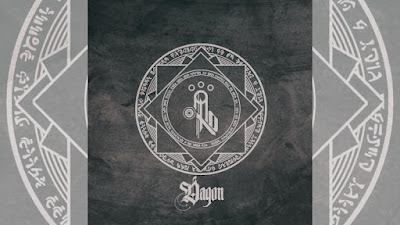
Dagon Cover Art


Something that always cuts through the bullshit of Xmas and New Years is the yearly Cryo Chamber Lovecraftian collaboration. This year’s offering is themed around Dagon, and as you might imagine, this means that the soundscapes emitted by its two, hour-long tracks, have a decidedly nautical, briny feeling.

From the very first second of track one, the sounds of waves, drones and horns fill the ear. There is a low heartbeat-like beat, a jittering chittering, whispers, and the impression of vast forces being mobilised. Your journey into submersion and the subterranean has begun, each area opening up and deepening into the feeling of vast underground places. Gaping water-filled caverns reflect back strange echoes from their walls. Trundling rasping sounds fill the mind with notions of strange machinery. Sinister vocals roam, from low distorted words to more melodic, siren-song snippets of mournful summoning.

One of my favourite moments of the album is around the six minute mark on track one. The cavernous soundscape sparkles and rasps with whispers, accompanied by muffled impacts rumbling in the distance. A drone fills the ear and laughter-like scuffling sounds pull the attention to the fringes. Strange whirring high tones seem to hint at strange creatures flocking in the dark recesses of the unseen rocky roof. It’s a pregnant atmosphere, pent up and ready to birth something horrible.

Another great section is around the fourteen and a half minute mark. The soundscape quietens and a strange female mewling vocal beckons. Water drips and trickles, and a buffeting sound ruffles the ears, much like wind blowing against noise-cancelling headphones. Twisting, smoothed notes pluck and echo away into blares of drone, the soundscape creating a feeling of being on the edge of something momentous.

Track two also has its fair share of succulent dark ambient to feast on. Eleven minutes in, a sustained drone is joined by a wet ‘thrashing around’, echoes, rumbles and airy tones, which create a fine impression of some strange creature wending its way across a shore in the dark abyss. As time passes, things feel more hollow, like a greater space has opened up, with the distant high calls of some kind of strange creature. The listener then breaks into a breath-infused space of threat and at times, what seems to be laughter.

Another moment in track two that I particularly enjoyed occurs at around minute twenty two. A roving undulating deep tone fills the ear, with high tones squeezing through the oppressive atmosphere. Again, there is an impression of breathing or the breath, and a little later, a ghostly hum. This section of the track feels dark but meditative, the lows and highs dancing around each other and setting off a shimmering, haunted, echoing space.

Dagon is another fine slice of eldritch dark ambient from Cryo Chamber. Going in, I wondered how it might compare to 2014 release Cthulhu, both being “of the sea”. If Cthulhu depicts what it might be like to be in a dark water abyss deep under the earth, Dagon, for me, is more a tale of what sitting on that dark shore might feel like, rather than being crushed by the water itself. If that makes sense. Both are fantastic albums in my opinion; I just wanted to describe how they both differed in how I felt when listening to them. If you love your dark ambient Lovecraftian, as always, you can’t go wrong with a Cryo Chamber collaboration.

Visit the Dagon page on Bandcamp for more information. You can also listen to the album below:


I was given a review copy of this album.


Album Title: Dagon

Album Artist: Cryo Chamber Collaboration

Label: Cryo Chamber

Released: 28 Dec 2021

Friday, 14 January 2022

Why Slay The Spire Is A Great Stoic Workout

Why Slay The Spire Is A Great Stoic Workout


Written by Casey Douglass


Slay The Spire

At a time when gaming has lost a big chunk of its appeal to me, the one game that has managed to cut through my indifference is Mega Crit Games’ Slay The Spire. It’s a great looking, well-designed and fun game, but on giving it some thought, I also think that it’s a great game for a practising Stoic. Stoicism is the philosophy that I am trying to embrace in my daily life, and many elements of Slay The Spire seem to lend themselves to its practice. In the following post, I ponder what some of those elements are, how they relate to Stoicism as I understand it, and why I think that Slay The Spire is a great Stoic game.


What is Stoicism? + Would Stoics Even Play Video-games?


Stoicism is a philosophy that was born in ancient Greece. It values reason and building character above anything else, and bares little resemblance to the modern day use of the word ‘stoic’. Stoicism, the philosophy, aims to help someone develop and make use of wisdom in everyday life, knowing which things to put their energy into, which things are actually in their control, and how to greet life’s challenges when they appear.

Would a Stoic “waste” their time playing video-games though? If you are looking at a philosophy, a religion, or any other outlook on life, you’re never far from questions such as “Would someone who adopts X as a philosophy do Y?” You’ll find people with zealot-like zeal who will revel in telling you that doing Y would never be entertained by people who truly want to adopt the particular view in question. You'll also find people who let almost anything go, it’s all good! I think it’s often a matter of personal choice and interpretation, with elements of situation, duration and motivation thrown in for good measure.

When it comes to video-games, I think that there is a world of difference between someone who obsessively plays video-games their every waking hour, and someone who dips into them in a measured way for awhile at the end of a long day. Even when two people play a video-game, their approach or goals can vary wildly, from the teeth-clenched rage-quitter who swears at everyone on their team for being a noob when they lose, to the quiet, patient person who loves solving strategic puzzles to increase their ability to think under pressure. If done in moderation and in the right mindset, pass-times and enjoyments are there to be savoured. Gaming is one of those things, and it might even be a fine playground for practising Stoic character traits or virtues, such as wisdom, courage and temperance.


Slay The Spire


Slay The Spire
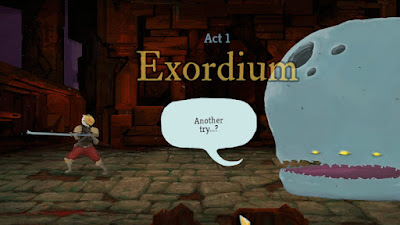
A boss battle in which I can just about survive until the next turn...

Slay The Spire is a deck-building rogue-like game where the player guides a chosen character up a Spire that is filled with various rooms, treasures and monsters. It is a game in which the player has some control over events in the choices that they make, but in other ways, are at the mercy of the randomly generated elements of the game. You might be on a very promising run up the Spire and, due to a few terrible card hands, end up dying to a basic mob. You might be on a run in which everything seems to be going wrong and yet you end up white-knuckling it through to the final boss. You often don’t know what will happen next, and that is where the fun is!

Knowing which things you have control over and which you don’t is one of the key aims of Stoicism, something Epictetus expressed when he said: “Some things are up to us and some are not.” If our state of well-being hinges on things that are not up to us, we end up struggling against reality and become prone to more negative emotions such as depression and hopelessness. In his book A Guide to the Good Life, William Irvine explains that following Epictetus’ teachings turns the usual way that we think about fulfilling our desires upside down. Rather than striving for things that we might not attain, the path to a good life is for us to martial the things that we do have control over, and that we are certain to achieve. A lot of this comes down to making our goals internal rather than external.

When it comes to Slay The Spire, this notion can be illustrated in the following way. If your goal is to get to the top of the Spire, that is not something that is wholly in your control. You have no idea which random cards, relics or bosses you will encounter, even if a thorough knowledge of the game might stop these from being a shock when they come. What you do have full control over however, is the goal that you want for yourself. If you set your goal as “I want to get as far up the Spire as I can, and not to give up even when things seem hopeless”, that is a very achievable aim. Even if you die to the first act boss, if you didn’t give up, you achieved your goal and can feel good about that.


Slay The Spire
You will see this screen a lot...

This is what I like about gaming in general, it gives us a chance to put into practise the character traits that we’d love to cultivate for other areas of our lives. You might like to add being patient and not letting frustration get the better of you too. You might not succeed at these 100% of the time, but if they are linked to a wiser overall goal of “seeing how far you can get”, even these slip-ups won’t feel so bad.

Something that I currently struggle with in Slay The Spire is being too hasty in my turn-taking, often realising that there was another card or potion that would have made a difference the split-second after I click the end turn button. Sometimes, I even end my turn and then notice that I still had enough energy to play one more card! So at the moment, while seeing how far I can get in each run, my intrinsic goal is to slow down and to give adequate time to finding solutions. Another thing that I’m prone to is fixating on a certain card build, whether or not I actually have the other cards to make it work. This often happens when a rare card comes into play and I take it, hoping that others that might support it will turn up later. Again, another goal is to not be dazzled by what's in front of me, to the extent that it makes me closed off to other possibilities. Slay The Spire is full of these little tests, and that’s why I love it.


The Stoic Test Frame


In another of William Irvine’s books: The Stoic Challenge, Irvine explains the value in meeting life’s obstacles and set-backs as a test from the Stoic gods. While you don’t need to believe in said gods, viewing things in this manner, as a challenge, can take some of the sting out of setbacks, and even add some fun into something that previously, you might have been despairing about. Irvine explains that a true setback has the element of surprise about it, but the ancient Stoics also engaged in toughness training, a process in which they deliberately put themselves into uncomfortable situations, in the hope of better dealing with setbacks when they popped up in other areas of life. Slay The Spire seems to have elements that are fitting for each approach, especially if you purposefully take the harder path or choice when the game presents you with one.


Slay The Spire
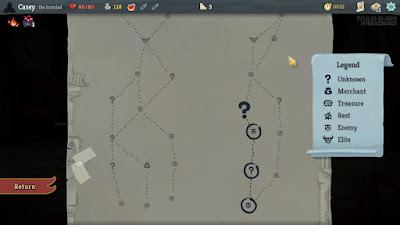
Which path to take?

A Slay The Spire setback that you have little control over might be that you are low in health and you decide to click on a mystery encounter, trying to avoid the certain monster fight that is your only other option. Once inside the room, you not only find that there are monsters inside, but that you are in a boss battle that you have no way of escaping. You die two turns later. You could rage and hiss your annoyance at the “stupid game”, and not learn anything from the experience. Or, you could notice the irritation that you feel, realise how unwarranted it is, and maybe even give a silent nod to the developers for crafting something so tricky and challenging. Your irritation is in response to something that you couldn’t control, and in realising this, you might give yourself a mental pat on the back as you chalk it up to experience. You might even feel pleased that you didn’t fuel your irritation until it blew up and ruined the rest of your gaming session. Same event, two different outlooks.

Video games seem to be the perfect arena to practise the Stoic Test Frame. After all, you already know that you’re playing a game, except in this instance, you are pitting yourself against the developer, possibly other human players, and, as in other areas of life, yourself. You only have to watch gaming content on YouTube or Twitch to see how games affect some players. There is a reason that the words “Rage” and “Tilt” and “Toxic” in video titles draw lots of clicks. If you want to see how to fail at building character, watch those videos. If you find that rare individual who seems to take setbacks in their stride with a smile and a more tranquil demeanour, enjoy their content and see how they frame things. You will more than likely find someone who loves rising to a challenge and who is also skilled at taking the sting out of what is happening by framing things in a beneficial way.

If you want to engage in some Stoic toughness training, you might even try playing Slay The Spire in a way that rubs against what you’d usually like to do. If you always grab certain cards or relics when they appear, you might like to have a run where you take cards or relics that you despise, or that go against your usual play style. If you prefer to keep your card-deck small, you might like to try accepting a card every time one is offered, letting you see what it is like to play with a massive assortment of cards. If you always avoid certain encounters or choices, forcing yourself to take them can be a wonderful way to learn something, and at the least, to get practise with some of the character traits that you want to nurture inside yourself. A video-game is the ideal, low-stakes place to try these kinds of experiments.


Slay The Spire
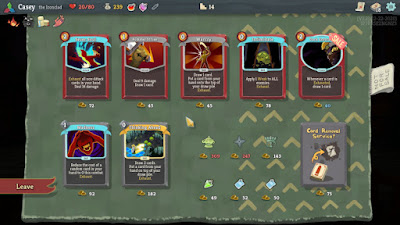
The shop in which many a build died due to temptation.

In Conclusion

I hope that I’ve done justice to the title of this post and have adequately explained why I find Slay The Spire to be so captivating. I’m sure that you can apply Stoic ideas to any game that you might play, but there is something about the turn-based, semi-random nature of Slay The Spire that seems conducive to having the space to breathe and to grow a little each time that you play it.

If you’d like to look into Stoicism a little more, you might like to read my review of William Irvine’s The Stoic Challenge, which is a book I very much recommend. I also recommend Donald Robertson’s How To Think Like A Roman Emperor, which illustrates many Stoic notions by depicting the life of Marcus Aurelius.

Tuesday, 4 January 2022

My New Book Horrifier is Available on Kindle Now!

My New Book Horrifier is Available on Kindle Now!


When I was a kid and on a long car journey, I would often imagine what it would be like if the distant traffic was vaporised by aliens, war, or even a marauding giant. As an adult, I still find myself doing this in a variety of circumstances; the more boring the situation, the bigger the challenge in spicing it up a little.

Early last year, I decided to create a collection of ten dark tales, each set in its own so-called boring situation. I imagined some suitable scenarios, and fed them through the ‘horrifying’ machine that is my brain. If, as John Milton says, our minds can make a heaven of hell and a hell of heaven, at the least, mine should be able to inject some interesting, darkly twisted elements into mundane activities.

So that’s what I did. How would I make a queue at the post office interesting? Or someone gazing out of the window? Or someone eating in a quiet restaurant? You’ll have to buy Horrifier in the Amazon Kindle Store to find out!


Horrifier Cover

https://www.amazon.com/dp/B09PHCXWHJ - Amazon.com

https://www.amazon.co.uk/dp/B09PHCXWHJ - Amazon UK


If you have a Kindle Unlimited Subscription, Horrifier can be also be read as part of that.

Friday, 24 December 2021

Dark Ambient Review: Heterodox

Dark Ambient Review: Heterodox


Review By Casey Douglass


Heterodox Album Art


A horror unfolding is often a double-whammy. You first have the shock of whatever it is, and then, quite often the insight comes that things are actually far worse than you initially thought. A world fifty years after an alien invasion is just as fascinating as another that is only just being conquered. What horrors will the first generation born during an alien occupation have to accept as normal? This is the kind of realization that Josh Sager’s dark ambient album Heterodox explores, the long-tail effects of the worst kinds of darkness, inspired by the soundtracks of some of the best movies of our era.

Opening track The Plague Doctors is one of my favourites on the album. There is a distant thunder-like sound, one accompanied by an almost jaunty pulsing rhythm. Static looms, with an impression of rain and a metallic squeal or shimmer. I half felt that I was listening to the softened sounds of traffic passing in the street. A ghostly vocal begins, and deeper vibrating tones around the midpoint, before things build to a climax and then slither away. For me, this track could have been a score to a film, one in which the opening scene shows a crowded, rainy pavement, with everyone moving in one direction besides a strange hooded figure that is eerily floating against the flow. A very pleasing and ominous track.

The second track is also one of my favourites: A Dread of Something Abnormal. It begins with a rotating resonance and a thrum surrounded by fuzz. It feels a bit sci-fi, the flares of higher tone leading me to think that this might be what an angel strapped into the large hadron collider might sound like. There are various swells and knockings later, and a buzzing that changed the angel mental image for one that evoked the happenings of The Fly film. This is a floating, roiling and pressurized track, one that reeks of science and technological power plucking at the workings of things that it should probably leave alone.

The final track that I wanted to mention by name is Monsters Make Monsters. This is a different kind of track, opening with echoing piano notes, notes that begin to twist and warp against a growing windy background. As the track continues, there is a low buzz, a swarm-like feel, hinting at massive industry that bodes ill for anyone nearby. The low, vibrating swells of tone and relaxed echoing beat that join confirm this feeling. This is the track where someone is out for a midnight walk and finds a meadow overrun with thousands of strange insects mating in the moonlight. Sinister.

Heterodox is another fine dark ambient album from Josh, one that, as the album description mentions, is a fitting sequel to his earlier release Interlopers. While the previous album felt more “abandoned industrial estate after a catastrophe”, Heterodox for me, lays out a more varied smorgasbord of threat. Some of the tracks suggest desolation, others some kind of lurking danger, and others still, more abstract feelings of delving into the gaps between realities. If you like your dark ambient ominous, technology-infused and desolate, you should check out Heterodox.

Visit the Heterodox page on Bandcamp for more information.


I was given a review copy of this album.


Album Title: Heterodox

Album Artist: Josh Sager

Released: 28 Sept 2021