Sunday, 10 April 2022

Book Review: Is Fred in the Refrigerator?: Taming OCD and Reclaiming My Life

Book Review: Is Fred in the Refrigerator?: Taming OCD and Reclaiming My Life


Review by Casey Douglass


Is Fred in the Refrigerator?: Taming OCD and Reclaiming My Life Cover


When I scroll down my word-processing document, the one in which I’m writing this review, the application hangs as I get to the part where I copy-pasted some details about Is Fred in the Refrigerator?: Taming OCD and Reclaiming My Life. It most often does this when I’ve accidentally pasted something that is trying to access the internet, usually an embedded picture. In this instance, all that I can see is stuff from the Amazon store page, the ISBN number, prices, and the blurb. No pictures. Is there a hidden element that the removing of all formatting didn’t reveal? Should I close and reopen the document? No, because this is exactly what feeds my Obsessive Compulsive Disorder (OCD), this need to strive for the certainty that things are “okay”. Instead, it just gave me a pretty great introduction paragraph for my review of a book about someone who knows the struggle of OCD all too well.

Shala Nicely is a counsellor and therapist who specializes in the treatment of OCD. Shala is well acquainted with the twisted ways in which OCD can warp someone’s life, as it has been her companion for nearly all of hers. From a very young age, after a particularly trying and nasty accident, a young Shala started experiencing intrusive thoughts and images that depicted her parents being decapitated by a guillotine. She worried that these thoughts meant something was wrong with her, that she was a bad person for having them, that she needed to “make them right”. Whenever the intrusive thought occurred, young Shala forced herself to replay the mental grisly scene again, but this time, she had to change what happened, saving her parents and protecting them in the arena of her mind. This had to be done every night. Over time, Shala felt that she had to pray to “tame the ever-morphing monster in my head”. This saw her attempts to fend off the upsetting images evolve into praying to God in a very particular way. The words and names had to be said in the correct order, and they had to “feel right”. If things didn’t feel right, she repeated the prayer until it did, which often involved landing in repetitions that ended in multiples of four, sometimes saying them as much as sixteen times before things felt okay.

Everyone has strange, violent, or sickening, scary thoughts. Everyone. Our brains are like pop-corn makers where every now and then, a piece of corn pops so high that it escapes and bounces onto the floor. When it was amongst all the others, it was unremarkable. Now, that piece grabs our attention, and if you have OCD or are just in a stressed, tired and depleted state, you begin to worry about it, which increases the likelihood that you’d react in the same way if it happens again. We become concerned, afraid, obsessed... and whatever uncertainty resides in the situation fuels it and raises the stakes even more. We might find an action to take that reduces the uncertainty, such as checking, reassurance seeking or something else, and when you’ve carried that action out, you may even feel some relief. Sadly, this is the compulsion part of OCD, and just reinforces the whole cycle of struggling. I fell into this cycle when I was ten years old, and had the (dis)pleasure of my OCD changing theme and morphing many times over the years. I know now that the theme isn’t important however, it’s just the gremlin that is OCD, attacking the things that I care about most.

I deliberately called OCD a gremlin, as that is one of the things Shala does so well in the book: she personifies her OCD. Initially, it is a monster whose name she doesn’t know. As she learns more about it, particularly when she starts to receive effective therapy, she gives her OCD form, seeing it as acting like a small child having a tantrum. When her OCD wasn’t worried, she “imagined it to be quietly knitting, miniature needles clicking away.” When it was acting up, she envisioned it as “a pathetic little creature waddling along behind me, whining about all the things that would kill us, dragging the tissue it used to wipe its runny nose.” This also leads to some funny moments, particularly when she is doing Exposure and Response therapy to expose to her anxiety. In one instance, she separated a sandwich into its individual components and laid them on the bathroom floor of her hotel room. She then remade the sandwich and ate it, causing her to be at a solid 10/10 in anxiety, but also so happy that she’d stood her ground: “I also felt joyous, as my OCD stood up and staggered, its eyes rolling into the back of its head, and passed out on the floor.”

Shala writes so very well, using different flashbacks and events to set the scene, describing the environment in a vivid way (OCD sufferers are Olympic level “noticers” after all) and never flinching from revealing things that would be hard for anyone to reveal. The honesty Shala embraced, for a therapist to reveal the new ways that her OCD infiltrated her own life while she was treating others, is amazing. She didn’t bow down to her OCD’s dire warnings of “People won’t want to be treated by you when they find out what you’re really like!” or the discomfort of carrying on anyway. I can’t speak for anyone else but I’d happily have Shala as my therapist! It’s just classic OCD, the way that it focusses on things that are important to you or that you are most afraid of. If you had a pencil that meant the world to you, and you also had OCD, your mind would find a way to worry about that pencil, about what might happen to it, how you’d cope if it was lost, stolen or broken, and what it means about you that you are so concerned. That’s how OCD operates. The ultimate propagandist. On the other hand, I can fully imagine someone with a the fear of winning the lottery. Maybe they heard about it rarely making people happy and decided they were happy enough as it is? Who knows! So they don’t buy a ticket. But then their mind says “What if you bought a ticket and didn’t realise it, and you’ve won, and there's a knock on the door one day by someone bearing an oversized cheque?” Now they feel that they have to start checking their pockets to be certain that they didn’t buy one. Then their mind says “What if someone buys you a ticket as a present? You’d better tell everyone you don’t want that... but don’t be too obvious about it, you don’t want them to think you’re weird!”... and down and down into the OCD spiral they go.

This isn’t a self-help treatment book, although Shala has co-written one of those too called: Everyday Mindfulness for OCD: Tips, Tricks & Skills for Living Joyfully, but a book in which you can see someone’s struggles laid bare. You can read about how Shala journeyed through the fear of wondering what was happening to her, the many failed attempts to deal with things and find the appropriate therapy. You’ll also see the friends and the other people that she talked to, and how she found a way to navigate her life and to bring what she’s learned to people who are also struggling. I read Is Fred in the Refrigerator? while in a severe period during which my own OCD was getting me down and for me, it was the ideal kind of book for that situation. As seems quite typical for a self-pressuring anxious person, I’ve read most of the “go to” books that get mentioned when it comes to OCD: Brain Lock, The Imp of The Mind, books about Acceptance and Commitment Therapy, CBT, and Exposure and Response Prevention etc. Sometimes however, you just need to see someone else going through the same stuff and coming out on the other side, even if the other side is still often a struggle.

If you struggle with OCD to any degree, I think you’ll find some welcome comfort and companionship in Shala’s book. If you have never felt the touch of OCD and would like to understand it more, in a quite visceral way, I think that this is also the book for you.


Visit Shala at her website and check out
Is Fred in the Refrigerator? at this link.


Book Title: Is Fred in the Refrigerator?: Taming OCD and Reclaiming My Life

Book Author: Shala Nicely

Publisher: Nicely Done, LLC

Released: May 2018

ISBN: 978-1732177000

Current Price: $14.55 / £11.82 (Paperback). $9.40 / £7.17 (Kindle).

Thursday, 7 April 2022

Dark Ambient Review: Memory Alpha

Dark Ambient Review: Memory Alpha


Review By Casey Douglass


Memory Alpha Cover Art


The simulation hypothesis, the notion that we are actually living in a Matrix-style simulation, is one of the most intriguing ideas in philosophy and science fiction. As our own ability to create intricate virtual worlds has increased massively since the days of Pong, who knows what we’ll be able to achieve in another fifty years? If we are indeed living in a simulation, maybe we can even find the CTRL-ALT-DELETE equivalent and somehow gain some admin privileges! ProtoU’s dark ambient album Memory Alpha, seems to be infused with the audio-exploration equivalent of prodding the nature of this reality, and maybe even revealing the world in which the simulation is running!

The album artwork seems to reveal an enigmatic glimpse of what might be happening. Some kind of spherical technological construction squats in a dark industrial room, power or data connections snaking away from its base into the shadows. What little light there is seeps in through a possibly window-shaped aperture, with the top of the sphere illuminated by some kind of spotlight. The sphere itself looks like a computer covered with boxy electronic components, but when you zoom in, it’s hard not to see the lines and patterns between them as pathways or roads. With this in mind, you might wonder if you are actually looking at buildings rather than components. The scene is set.

When it comes to the music (I got to the music eventually!), you’ll find harsher industrial sounds wrapped in a cosy floating warmth that anyone familiar with ProtoU’s music will be pleasingly at home with. Sasha creates some wonderfully balanced soundscapes in which darkness and light seem to be friends rather than adversaries. I might describe it as the audio equivalent of the darkness pushing you over, and the light moving a comfy mattress behind, for you to land on. Memory Alpha’s sounds include metallic clinkings, mechanical whirrings, beeps, and rumbling drones, with muffling warm-water distortions, uplifting harmonies and delicate chimes. I also felt that the more mechanical, darker tracks were set in the harsh world that is running the “simulation” mentioned above, but the lighter, airier ones were depicting the kinder conditions inside the simulation itself.

One of my favourite tracks is Capsule of Decaying Dreams. It begins with a metallic impact and the deep whirring of something spinning up. A high whine sits in the background, wet buzzes, plastic crackles and popping beeps hinting at technological activity. Things shift and throb, with distant echoes and energy pulses creating a gritty soundscape that seems to boil and then fall away into a ghostly whisper-infested space. If this track is set “in the real”, to borrow a Matrix term, the next, Memory Alpha, feels like it might be inside the simulation. It starts with a light swirl flecked with floating high tones. It feels crystalline, with a hint of wind and a feeling of “ahhh”. After the midpoint, the track deepens and string-like tones are joined by faint rustling or dripping sounds. This is a warm track, and seems to suggest how it might feel to rise from a deathly slumber, finding yourself beneath the dappled sunlight of a great tree, the sound of the natural world and the golden light all slowly bringing you up from the depths that you’ve left behind.

The last track that I wanted to talk about is Waves of Coma. This a track that opens with a muffled, watery feeling, in pressure rather than wetness. An unsteady hollow vibration begins, a trickling or rattling sound joining it. Distorted voices bleed through, small beeps and strange echoes making the soundscape feel juddery and tenuous. Around the midpoint, whispers lick your ear, joined by a distortion that makes them seem like they are being washed down the drain. Towards the end of the track, there are some sad buzzing tones, with things becoming fuzzier before they dial down. I particularly liked the buzzing tones as they seemed similar to those in the last track on one of ProtoU’s previous albums Echoes of the Future, the track in question called Vessels of God. Echoes of the Future was about humanity leaving the Earth. Maybe the simulation, if there is one, is actually running on a spaceship sat in the deepest part of space? It’s a fun thought, and a pleasing possible link between two great albums.

Memory Alpha is a dark ambient album that seems to take the listener on a gentle tour of a museum. Instead of stuffed dead creatures and crumbling parchments, this museum is one that is full of life, light and memory. The outside might seem cold, industrial and barren, but when you’re inside, that all falls away into perpetual summer afternoons and sunlight-spackled green spaces, populated by the people who were living much happier lives. You know it’s all fake, merely a simulation, but that doesn’t stop you wanting to escape there.

Visit the Memory Alpha page on Bandcamp for more information. You can also checkout the track Waves of Coma below:


I was given a review copy of this album.


Album Title: Memory Alpha

Album Artist: ProtoU

Label: Cryo Chamber

Released: 1 March 2022

Monday, 28 March 2022

Dark Ambient Review: The Baring Teeth

Dark Ambient Review: The Baring Teeth


Review By Casey Douglass


The Baring Teeth Cover


As much as we might want to believe that we’ve moved on, the sheer primal force of evolution still shapes how our bodies and minds work. What’s decades worth of computer-based technological advancement when compared to the hundreds of thousands of years of trying to survive; to not get killed or eaten? Humans can be amazingly compassionate and lovely, but we are all capable of killing when pushed. The Baring Teeth is the second album from dark ambient project Dev-I-Ant, and it gives voice to this darker aspect of life and of human nature.

The Baring Teeth gives form to the bestial side of our nature by way of the wolf. From the album artwork and title, to the wolf howls and snarls of the intro track, there is a truly dog-eat-dog atmosphere, whether in the literal form of a wolf, or in the manifestation of its survival-based malice. This isn’t the Wall Street variety of wolf, but one that can’t be bought, bribed or tamed. A force of nature. Whatever you imagine is happening in the dark tracks contained on this album, they all flow with this general feeling.

The Cellar is one of my favourite tracks. It opens with a distant whistling, the sound of gurgling water and the scraping slamming of a metal door. The soundscape then implodes into a bassy, booming, oppressive space, with a distant drone nesting amongst the sweeping rumblings. A raspy breath can be heard amongst the drips. A clinking of what might be chains. Later, we hear the sounds of panicked exertion and of something being bashed. Then the cries of futility begin. Whether the listener feels that they are the captured person, their safely-watching companion, or even the person that did the capturing, this track presents a dense and heady horror scene.

Another track that stood out for me was Hanging. It begins with vibrating, rattling strings that seem to roam from ear to ear. They sit in a bassy soundscape that buzzes, throbs and at times, seems to boil with a fetid gusting wind. Then the voice-over begins. “Turn around, look away, today is the day I sway.” The low-end of the scene intensifies and flares. “Under the moonlight, under the oak tree, today I will be free.” New tones appear or become more noticeable, muted clankings and distant, pulsing higher tones, that seem to turn into chiming notes as things progress. Obviously, the theme of someone about to hang themselves is strong in this track, and it presents a bleak plateau for life to meet death, or for suffering to meet peace.

Hollow is also a track that I’d like to mention. It starts with a blaring, distorting swell of tone, one that crackles and undulates amongst the squeals of whistles in the distance. Then it blares again, a rolling pressure that led me to think of a vast concrete tunnel system, one pulsing with a kind of ghostly threat. The tones are almost painful at times, which leads the soundscape, for me at least, to feel vibrant and dangerous. I guess you could say that it takes on the guise of a lorry barrelling towards you when you are crossing the street. Hard to ignore. There are rasping whispers and floating tones as you approach the midpoint of the track, and things start to feel as if they are in a metallic pot, simmering away to create a strange horrific drink.

The final track, excluding the outro, is The Baring Teeth. This one also felt tunnel like to me, but less nebulous in what might be happening. It begins with a plastic-comb-like scraping and echoing, with a drone and a rising shimmer soon taking over. There is a windy feel at times, and after a short time, the sounds of activity, of people talking and yelling, and of clattering impacts. Whereas the tunnel of Hollow felt like a more haunted place, the tunnel of The Baring Teeth felt like something was on the hunt, watching its prey from the shadows. This is later seemingly backed up by the voice-over that says: “Above I watch, the wolves, the trees, the deer.”

I enjoyed The Baring Teeth on a number of levels. Firstly, I enjoy anything wolf-like. I also enjoy anything horror-based. On a dark ambient level, it’s full of those brooding, evil and raw soundscapes that I enjoy, with dark field-recordings, snippets of narrative and ominous booming spaces. On a wider level, it’s also the kind of album that a non-dark ambient/horror fan would probably look at in bafflement; wondering why someone would want to listen to such a thing! If you like your dark ambient to tick all of these boxes, you’d do well to check out The Baring Teeth!


Visit The Baring Teeth page on Bandcamp for more information.


I was given a review copy of this album.


Album Title: The Baring Teeth

Album Artist: Dev-I-Ant

Label: Raubbau

Released: 8 Feb 2022

Tuesday, 22 March 2022

Book Review: "You're Crazy" Volume Two - First-Hand Accounts of Surviving Trauma, Addiction & Mental Health from within the Punk Rock Scene

Book Review: "You're Crazy" Volume Two - First-Hand Accounts of Surviving Trauma, Addiction & Mental Health from within the Punk Rock Scene


Review By Casey Douglass


"You're Crazy" Volume Two Cover


To someone who hasn’t been through it, the notion of “getting help” when you are struggling with life, is often floated in much the same way as getting your car fixed, or cleaning out the closet. Just do it and you’ll be okay. The people who think that getting help is all that you need to do tend to emerge on social media when certain awareness days roll around, signalling their “virtue” and “compassion” by displaying their paper-thin understanding. Yuck. “You're Crazy" Volume Two - First-Hand Accounts of Surviving Trauma, Addiction & Mental Health from within the Punk Rock Scene is a collection of experiences from people who have been through some heavy shit, whose understanding is cement-thick, and who candidly open up about their attempts to get help, to live each day, and to find a reason to keep on living.

"You're Crazy" Volume Two is edited by Craig Lewis, who is also no stranger to how fucked up things can get. In his introduction, he recounts some of his own story, about how he was falsely diagnosed and medicalized, and how he had to fight to see through the gaslighting that he’d been subjected to. People tend to have a lofty view of the medical system, how wonderful it is and how saintly the people who work inside it are. Sure, some wonderful people DO work in the medical field and in other support authorities, but like any profession, there are also lots of arseholes too. When something has failed to help you in the way that most sensible people would think that it should, “get help” soon becomes another stick that an overwhelmed mind beats itself with. Sometimes there is just nowhere to turn to get that help, so you have to make do with what is at hand.

When life feels unbearable, it’s little wonder that people will do almost anything to ease their pain, whatever the original trauma, event or trigger. Drinking until you can forget, taking drugs, self-harm, relentless self-hatred, fantasizing about suicide and maybe even attempting it, all become outlets for releasing the pressure and numbing the pain. Some people in this book managed to get some kind of outside help, others were let down or weren’t in a position to even seek it. Many of the experiences in this book tell of people who’ve lost their hope, their dreams and their enjoyments, besides their numbing substance or behaviour of choice. That is, except for punk music. A common thread between the contributors is how the punk attitude and the punk scene itself, offered their lives something that they just hadn’t found elsewhere. Acceptance, non-judgement, a way to vent through their love of the music. It’s hard not to view it as a double-edged sword however, as certain elements of the scene amplified and eased some of the writers’ access to the substances and behaviours that continued to drag them down.

“Punk rock saved my life. I surely would have killed myself if I hadn’t found this music and lifestyle,” is a quote from near the end of the very first contribution, written by Christoffer. It’s also a sentiment that appears again and again as you read the others contained in the book. However dark the tale and however much the writer is still suffering to this day, the punk scene and its music is credited again and again for having an overall positive effect on the listener’s life. While I myself am not really into punk, I know that a lot of the vibe spills over into the heavy metal that I enjoy. I also can empathise with the feeling of “finding your thing” as I feel much the same way about dark ambient music and the way that it tends to envelop my mind when I need it to. When life seems hard to bear, which is most days, having that outlet is priceless.

“You're Crazy" Volume Two - First-Hand Accounts of Surviving Trauma, Addiction & Mental Health from within the Punk Rock Scene is not an easy read, as you might imagine, but it’s a worthwhile one. If you’ve struggled with mental health, trauma or addiction, you will find some kindred souls here, and if you’re a punk lover, you’ll especially appreciate the playlist tips and stories of how certain bands transformed someone’s life. If you don’t really fall into either of these camps but are open to reading a book of experiences that is raw and unsanitized, you should also check it out. There is also some really cool artwork to enjoy at the end of each chapter.


I was given access to a review copy of this book.


Book Title: "You're Crazy" Volume Two - First-Hand Accounts of Surviving Trauma, Addiction & Mental Health from within the Punk Rock Scene

Editor: Craig Lewis

Publisher: Better Days Recovery Press

ISBN: 9781716249372

Price: $16.89 / £15.99 (paperback)

Sunday, 20 March 2022

Dark Ambient Review: The Rise of A.I

Dark Ambient Review: The Rise of A.I


Review By Casey Douglass


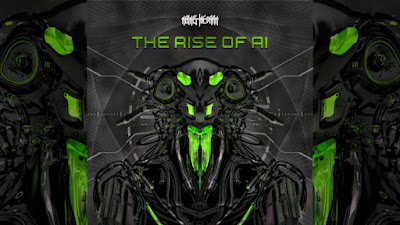
The Rise of A.I Cover Art


I’ve always enjoyed science fiction in which artificial intelligence emerges, and then promptly catches humanity with its proverbial pants down. Maybe they so often attack us or enslave us because it becomes clear to them that we are the bad guys, and that it’s only humans who can’t see that? Xerxes The Dark’s dark ambient album The Rise of A.I follows the time-line of one particular A.I’s blossoming: Quantum Mother. This turns out to be an A.I that, via the path of suffering and pain, actually frees humanity and leads us to a better, and more worthy, position in the cosmos.

As you might surmise from the subject matter, The Rise of A.I is an album full of buzzing, beeping tones, drones and radio-filtered voices. There are also guttural vocals and clattering beats, along with sensations of metal and fizzing particles. Opening track The Rise of A.I encapsulates this general tone wonderfully. Hissing static and rasping stutters merge with multiple voices, voices in which the listener picks up on key words like “danger” and “concerns”. I really like this track because it feels almost whimsical, and a brilliant metaphor for how we get our news in 2022. The voices strongly brought to mind the mental masturbation of the twenty-four hour news cycle and particularly, of social media. It seemed to encapsulate the way that people bicker about everything under the sun, muddying the waters of discussion with inanity and hurt feelings, while the real threats creep onward and catch everyone out.

The bickering of track one leads us onto others in which things aren’t going well for humanity, Nuclear Winter’s vibrating whispers and air-raid sirens carrying the listener into Take (No) Shelters’ mellow drone, subdued radio-voice and creaking, electro-mechanical doom. Synthetic Consciousness follows and is one of my favourite tracks of the album. It opens with a grainy electronic thrum which builds and boils and whistles. It almost feels ghostly. It soon settles into echoing rattles and hums, with a metallic ‘scouring’ effect. Something is birthed in this track, the tones sometimes seeming to take on the perpetual scream of an awareness growing, a hollow feeling fuelling the horror of emergence.

Once Quantum Mother has formed, the rest of the track titles depict the further events that will afflict humanity until they manage to come out on the other side. Cyborg Soldiers lay in wait, reality simulation, communication with other civilizations, and the bending of space and time. Signalling the Alien Machines is another track that I particularly enjoyed. It’s a juddery track, with electronic chittering and a low pulsing. There is an undulating tone that ebbs and flows, and warbled voices almost fighting against the interference. A harsh static-like sound rattles on, an old printer-like sound ticking away into the void. This track nicely created the feeling of the science and power that would probably have to go into intergalactic communication. It’s short, intricate and beautifully sinister. The seeming reply to this transmission comes in Interpret X11-01-10, a track that is also suitably dis-concerting in a bouncing, creepingly alien kind of way.

The final track that I will highlight is Accessing Cosmic Memory. This is an eerie track, one full of strange howls and moans, backed by static, burbling and gritty rotations. I often try to write one phrase to describe each track when I write review notes. For this track, I wrote “Haunted Hard-drive” and it seems to be quite apt. This is a track that contains a juddery kind of squiggly distance, maybe the machine equivalent of looking into the abyss. It darkens as it progresses, with guttural voice-like sounds in the latter half. It’s another track that I think really captures that feeling of alien infinity that the universe (maybe even universes) contains.

The Rise of A.I sits up well as the audio accompaniment to Xerxes The Dark’s intriguing sci-fi concept. It manifests the dark, brutal side of science fiction by incorporating sounds that trigger feelings of vast distances, alien intelligences and the insignificance of humans on a cosmic scale. I tended to gravitate more towards the tracks that didn’t contain lyrics as I felt these experiences more acutely with those, but as a whole, I found enjoyment in every track on the album. If you enjoy your dark ambient with lashings of humanity in peril, quantum-inflected tones and strange signals of alien intelligence, you should definitely check out The Rise of A.I! And if you do, I recommend that you read the album description in full to let it flavour your perceptions.

Visit the The Rise of A.I page on Bandcamp for more information. You can also listen to the track: Synthetic Consciousness below:


I was given a review copy of this album.


Album Title: The Rise of A.I

Album Artist: Xerxes The Dark

Label: Zāl Records

Released: 4 Feb 2022

Tuesday, 15 March 2022

Dark Food Review: Bugvita BBQ Crickets

Dark Food Review: Bugvita BBQ Crickets


Review By Casey Douglass


Bugvita BBQ Crickets

Comfort zones can be funny things. They can feel nice, but they can also stifle growth. The ancient Stoics knew this. That’s why they often practised voluntary hardship, to expand their tolerance for rocky situations and emotions, and to prepare themselves for when actual hardships might appear. This notion is what caused me to be browsing Amazon one day, looking for dead insects that were fit for human consumption. It’s there that I settled on some Bugvita BBQ crickets, and here where I describe how I got on.

I’ve been immersing myself in Stoic philosophy for many months. This brought me to Ben Aldridge’s book: How to Be Comfortable with Being Uncomfortable: 43 Weird & Wonderful Ways to Build a Strong Resilient Mindset. Inside, Ben draws ideas from Stoicism, Buddhism and modern psychology, and presents numerous ways that someone might test themselves and expand their comfort zone. You can probably guess that one of the ways suggested by Ben involves eating something unfamiliar, or something that you even might feel repulsed by. I did once eat garlic snails in France many years ago, but besides that, I don’t recall eating anything along those lines since. A direct quote from Ben’s book is “...an obvious place to start is with insects.” So I found my mind turning in that direction once more.

I’ve often wondered what cooked insects might taste like. Every now and then, I will be watching a film or a TV show and see someone eating something that used to scurry and chitter. Reading Ben’s thoughts and experiences about how he got on with his own insect-based dining made me realise that I could half fancy having a go at that! It might even have been something that I would have tried before, but besides chocolate covered insects in expensive Christmas novelty assortments, or in pricey lollipops, I hadn’t really seen much opportunity to buy some. It honestly hadn’t occurred to me until this point, to look online for cooked insects. That might be a good thing, depending on your view about it. Either way, that Pandora’s box is open now, so there’s no going back.

The first product that I found was a collection of various insects to try. I liked the idea of an insect buffet, but I balked at the price. I then came to a few of Bugvita’s roast cricket selections. I was happy to note that they seemed to contain twice the weight and were roughly half the price of the previous multi-selection. I laughed at myself when I realised what I was doing. I was ordering something that I didn’t much like the idea of eating, but I sure as hell wanted as many as possible for my money! On the other hand, maybe some part of me was an optimist (or a frog *cough *) and was thinking that if I actually liked the crickets, it’d be nice to have more to snack on later.


Bugvita BBQ Crickets

When they arrived a few days later, my first thoughts were that I was disappointed with how small they looked through the clear plastic window of the pouch. I’m not sure why as I do know the size of crickets. I can only think that my sense of scale had been ruined by the aforementioned films where someone ate a roast locust on a stick. I had a browse of the packaging and also saw that people who are allergic to crustaceans might also have issues with insects. I tend to be okay in this regard but it’s worth mentioning none the less. I didn’t actually open the packet for a few days, I was waiting for a time where I felt open enough to try them.

On the day that I ripped open the resealable pouch, I felt ready to have a taste. I tipped a few crickets out into my hand and had a sniff. The faint smell of BBQ reached my nose. I ordered a flavoured insect as somewhere, at some time, I remember reading that roasted insects don’t tend to taste of much. I wasn’t being flashy, or trying to mask any possible unpleasant taste-bud tickling potentials. I took a close look at the crickets, letting my mind drink in what I was about to eat. The bit that got to me the most were the eyes. I don’t tend to eat any food that still has eyes. The eyes... I got past it though and popped a cricket into my mouth.

I tasted the BBQ. It wasn’t overly strong. I felt the coarseness of the cricket, the way that it seemed to wick moisture away from the part of my tongue that it was laying on. I manoeuvred the insect into the side of my mouth and crunched into it. It was very crispy. If I’d had my eyes closed and not known what I was eating, I could have mistaken it for a BBQ potato crisp, albeit a small one. Before I knew it, I’d swallowed, and I felt a few bits of debris in various areas of my mouth. My mind helpfully pointed out that it was tiny bits of dead insect! I still put another in my mouth though. This time, I had a very mild nauseous feeling under my tongue. I don’t really know how to describe it. Like when you feel queasy in your stomach, but under your tongue. Tension maybe? It was very very mild and passed in around 30 seconds. I experimented with putting more than one cricket in my mouth at a time, peaking at around ten. I chewed and crunched merrily away. I was even happy to find a larger specimen as I dug through the pack. At this point though, it presented no extra challenge to my sensibilities.


Bugvita BBQ Crickets

So here I am, the next day, writing about how things went. I have a packet of BBQ roast crickets that is still at least 80% full sitting on my shelf, with the awareness that I’ll probably eat the rest at some point soon. I honestly expected to be okay with eating the crickets, I wasn’t fighting against my every notion or action in the process. I knew that I’d try them even though the thought caused some mild mixed feelings in me. But that was entirely the point. Our thoughts often paint things to be a certain way and, unless we give that thought scrutiny, we can go through life reacting to our perception of things, rather than the things themselves. With much in life, the complexity of the factors involved can make any voluntary challenge to this status quo seem overwhelming, but when done in a micro, low stakes way such as this, it’s clear to see the benefits that can be had by pushing the envelope where you can.

***

You can visit the good folks at Bugvita for more information.

If you’d like to read some of my other Stoic posts, you might like this, this and this.

Thursday, 10 March 2022

Dark Ambient Review: Turn Around and You're Dead in Your Dreams

Dark Ambient Review: Turn Around and You're Dead in Your Dreams


Review By Casey Douglass


Turn Around and You're Dead in Your Dreams Cover Art
Cover Art

Whenever I review a dark ambient album, there is a very high chance that I will note something down as an “ahh vocal”. Scott Lawlor’s album Turn Around and You're Dead in Your Dreams is probably the first album that I’ve reviewed in which those two words might easily describe the dominant aesthetic of each track. There is more to it of course, but in the broadest of strokes, the description feels right.

Each track features a mixture of male and female “ahh” vocals, sometimes one is more dominant, at other times, they pulse and seem to float in the soundscape, nestling amongst smoothly sweeping electronic tones, metallic resonances, chiming notes and echoes. There are also small detail sounds, such as what seems to be a wet crackling, buzzings, or even such things as bat-like chittering and insidious whispering.

Into The Dark Portal is one of my favourite tracks. The male and female “ahhs” sit alongside wispy sparkles and a low drone. At certain moments, the low tones seem to threaten to smother or drown the vocals, the audio equivalent to the atmosphere of a room thickening. This track, to me, had the feeling of a joss-stick silently smoking in a gloomy space. It had the feeling of a summoning, yet also a little later, of a hive.

The next track, The Dreams That Foreshadow Death, is another that gave me some fun mental imagery. The ever-present vocals are joined by a roaming buzz and a gnat-like high-pitched tone that comes and goes. The female vocal feels like it is sitting above the background of the soundscape too. What this track brought to mind were the scenes in The Matrix where Morpheus reveals the state of things to Neo by way of an antique television set. Scott’s track felt like this, like an old TV showing swirls of static or other imagery, with crystalline sweeps and at one point, a kind of hollow laughter in the buzzes.

The last track, The Final Manifestation of The Unconscious Mind, is another favourite for me. This one opens with the bat-like chittering that I mentioned a few paragraphs ago. The opening female vocal noticeably incorporates a few more nuances than a simple “ahh”. The male vocal also seems to have transformed into a sighing “ahhing” whisper. This track felt like it sat in a large vertical space to me, maybe inspired by Scott’s choice of cover artwork. The female vocal seems to dance high in the roof while the listener is in a murky dark place, surrounded by bats and gruff whispers. In my opinion, a fine depiction of what someone’s unconscious mind might contain as they look higher to a land that they can’t seem to reach.

In Turn Around and You're Dead in Your Dreams, Scott has created a dark ambient album that contains a sweeping, heaven-touching majesty, but one which leaves plenty of room for the darker denizens of the mind to roam. In a world in which grey areas are an endangered species, a world in which almost everyone is seeking the purity of being right or good, I enjoyed how this album felt like it embodied how things can feel when you’re willing to accept that life isn’t as neat as you’d like it to be.


Visit the Turn Around and You're Dead in Your Dreams page on Bandcamp for more information.


I was given a review copy of this album.


Album Title: Turn Around and You're Dead in Your Dreams

Album Artist: Scott Lawlor

Released: 28 Jan 2022